
 MySwissAlps.com features ads, commercial and non-commercial
 This page was last updated by
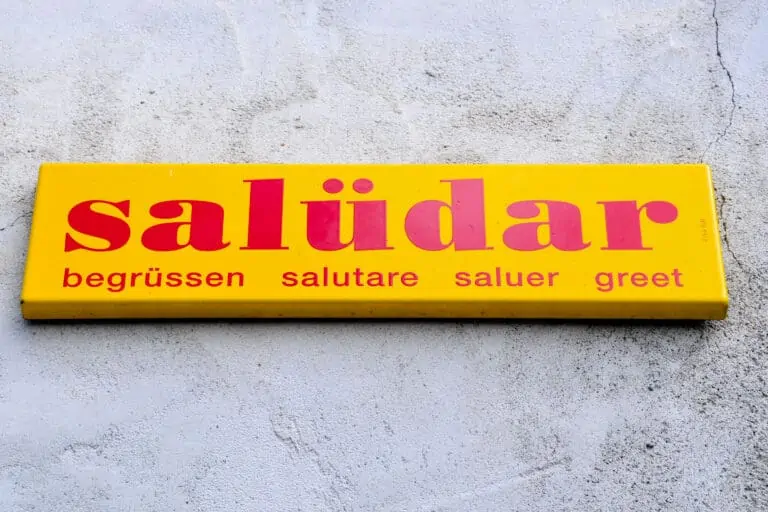
 The four official languages in Switzerland
The official languages in Switzerland are:
- German or Swiss German (62%)
- French (23%)
- Italian (8%)
- Rhaeto-Romanic (0.5%)
The great number of languages spoken in this relatively small country can be explained by the history of Switzerland.
Languages in Switzerland by region
The main Swiss languages by region:
- German or Swiss German: North- and East Switzerland and parts of the Valais. This includes Basel, Bern, Lucerne, Interlaken, Zermatt and Zurich.
- French: West Switzerland. This includes Geneva and Montreux.
- Italian: South Switzerland, particularly Ticino (Lugano, Locarno) and the south of Graubünden.
- Rhaeto-Romanic and German: most of Graubünden (Davos, St. Moritz).
The above overview lists the main languages in the mentioned regions. All regions do have minorities with a different main language, which can be one of the official languages, or English or something different.
German versus Swiss German
The majority of Swiss people speak German. German spoken in Switzerland is also called ‘Schwiizerdütsch’, or ‘Swiss German’. Don’t expect to understand Swiss German if you understand standard German as it’s spoken in Germany. It sounds totally different. Swiss German has its own words and very different pronunciation.
Some examples of typical Swiss words are ‘grüezi’ (hello) and ‘grüezi miteinand’ (hello all together). German people will not greet you like that. On top of this, there are different dialects per region.
Even though Swiss German is very different, you can speak standard German. Most Swiss people will understand you perfectly fine, and will adapt so you understand them better.
Getting around with English in Switzerland
It is no major issue if you don’t speak any of the local languages. About 6% of the Swiss population uses English as the main language. Many others speak English as a second or third language, especially those working in tourism and on popular public transport routes.
Based on our experience, places where it’s most likely that the staff speaks limited or no English are regular shops not specifically geared to tourists in Italian and French areas. This includes supermarkets and gas stations. Staff members may ask a colleague who does speak English to assist.
If you’re looking for something very specific, it helps to look up that word in the local language. And it’s always useful to learn a few standard phrases in the official language of the Swiss areas you’ll visit. Your effort will be appreciated!
Is there one generic Swiss language?
There is no language that everyone in Switzerland speaks. While the majority speaks German, not everyone living in French- or Italian-speaking areas speaks German as well. When Swiss people with different main languages meet, they speak any language that both of them understand.
Other websites of interest
- www.bfs.admin.ch: languages in Switzerland
- www.atlas.bfs.admin.ch: languages in Switzerland by region