

 MySwissAlps.com includes
Consult the 7-day Swiss weather forecast
The Swiss weather websites and apps we use
Websites and apps
Arno and I have learned that combining 2 different forecasts provides a pretty good estimation of the day’s weather at our destination. We use:
- www.meteoschweiz.ch and its app MeteoSwiss
- www.srf.ch and its app SRF Meteo (in German) for Android and iOs
These are pretty reliable, although a 100% accuracy isn’t possible with the changeable Swiss circumstances. Both apps allow you to add favorites to the home screen, so that you can quickly consult forecasts for your destinations. Plus, they show details per hour or part of the day.
Why you should check local forecasts
The weather in Switzerland varies by altitude and region. Therefore, a Swiss forecast that provides one symbol or temperature for the entire country and the entire day doesn’t give you the information you need.
How to find the local forecast for your region or town
- Option 1: use SRF Meteo, as mentioned above, and enter your destination.
- Option 2: use MeteoSchweiz/MeteoSwiss, as mentioned above, and enter your destination.
- Option 3: consult the weather sections on our town and region pages, and on our activity pages.
Where to check Swiss precipitation radars
In addition to regular forecasts, it’s helpful to consult up-to-date precipitation radars. Thunderstorms, lightning, hail, snow, sleet, and wind can often be displayed too. I mostly use:
- www.meteoschweiz.admin.ch
- the MeteoSwiss app
Here, you can easily switch between several radars and their short-term predictions.
Where to check Swiss snow conditions and avalanche risks
Snow status and snow depth
If you enjoy skiing, snowboarding, or winter hikes, it’s important to check the snow depth at your location. You can do so through:
- the Swiss Snow app for Android or iOs
- www.meteoswiss.admin.ch: the amount of snow at measuring stations in Switzerland
- www.slf.ch: snow depth at measuring stations throughout the country
- www.slf.ch: maps with snow conditions (only available in winter)
Avalanche risk
You should always consult avalanche bulletins and risk analyses if you plan to get out in the Swiss mountains while there’s snow. Check:
Where to find Swiss UV forecasts
For this purpose too I recommend:
Consult the legend at the right for an explanation of the several UV intensities. Protect yourself from sunshine accordingly: see my packing and clothing tips.
Where to find live webcam images of Swiss mountains and other locations
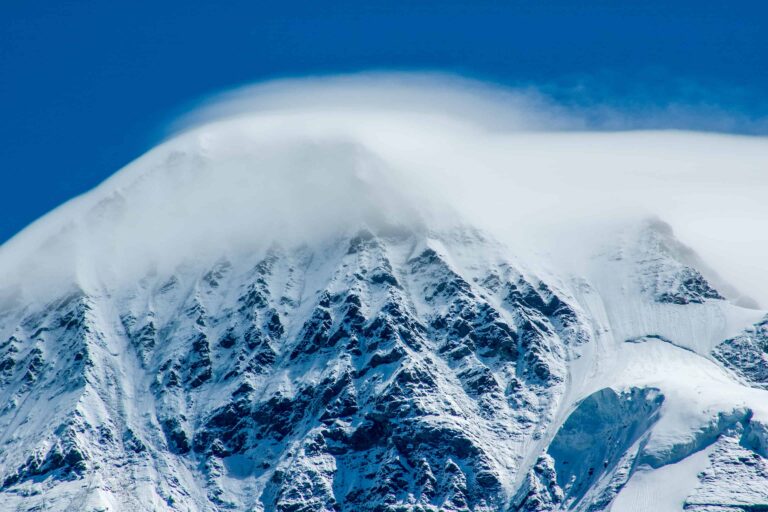
Webcams are a great aid in deciding whether or not to make a day trip, especially if you want to head into the mountains. The peak you want to visit may be covered by clouds on an otherwise beautiful day. But reverse conditions can occur too, mostly in autumn and winter. In these seasons, clouds can block the sun in the valleys, whereas you can enjoy clear skies at the mountain tops.
I recommend:
How to be notified of weather hazards
It’s important to be informed in case of potential danger, so that you can adjust your trip if necessary. I mostly rely on:
I regularly check the “Severe weather / Hazards” sections here, and subscribe to push notifications to receive warnings for my favorite locations. In addition, I’ve installed:
- the Alertswiss app, which issues warnings in case of weather dangers and other emergencies
Understanding the weather forecast for Switzerland
Forecasts for more than 5 days ahead are useless
The first thing you need to know is that long-term forecasts (for more than 5 days in advance) are useless. The weather in the Swiss Alps is unpredictable in the long term, and often even in the short term.
Swiss forecasts are somewhat reliable for 2 to 3 days ahead of time. The forecasts of the prior evening and the same morning are 75% to 100% accurate, according to my experience.
Weather can change quickly, no matter what predictions say
Regardless of the predictions, the weather in Switzerland may change quickly. Dramatic differences throughout the day, or between one valley and the next, are no exception.
What if the forecast predicts days of continuous rain?
The forecast may show rain every day. That doesn’t necessarily mean that it will rain all day long. Often, 90% of the day will just be cloudy or even sunny, and 10% of the time will be rainy. You can spend many hours outdoors on such days.
Tips:
- Consult local forecasts for your town, region, or mountain destination. Look at the forecast per hour/timeframe, as there may be significant differences throughout the day.
- Be flexible. Don’t have a fixed itinerary but adjust your plans to the weather, or at least have a backup plan. You can do something else or go to a different region for a day if the forecasts show better weather there.
- Relentless rain for days in a row is less likely, but not impossible. In that case, you can visit a town, a museum or enjoy a train ride. There is still plenty to do and see. I’ve listed bad-weather suggestions on our town and region pages.