
 MySwissAlps.com includes
 This page was last updated by
 Find your hotel in Lucerne
Where to stay in Lucerne
Stay in the old town
Most of the hotels in Lucerne are within walking distance from the rail station and the historic town center. The rail station is the starting point for all attractions, including the Pilatus, boat trips and more.
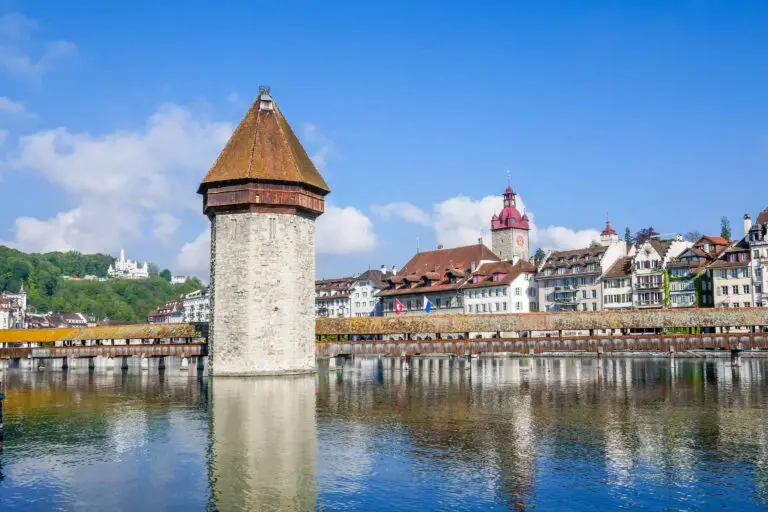
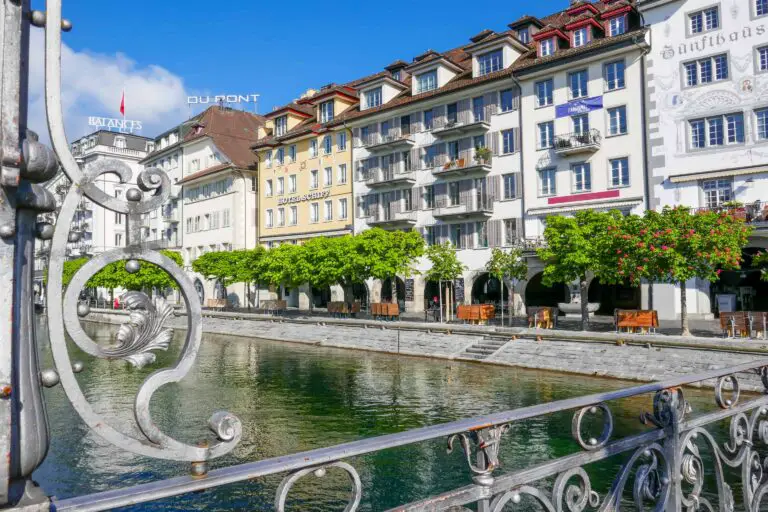
Best known is the street called “Rathausquai”. It’s a vibrant street with many beautifully located restaurants and several hotels. These are just minutes on foot from the rail station, on the northern bank of the river Reuss, and opposite the famous Chapel Bridge.
Other nearby streets, either on the northern or southern river bank, are a great location too.
Stay on the lake
There are hotels on the northern boulevard of Lake Lucerne, close to the Swiss Museum of Transport. Such a location requires an extra 10- to 15-minute bus or train ride to the main station.
Stay near the train station
Point to the hotel to see how much time it takes to get there.
Stay in Hirschmatt-Kleinstadt
The Hirschmatt-Kleinstadt district is directly west of the Lucerne railway station. It’s a mixture of new and old architecture. Some hotels are at just a few minutes’ walking distance from the rail station. And if you book a hotel not too far south in this area, you’re still close to the old town.
Stay in Neustadt or Unterlachen-Tribsen
The districts Neustadt and Unterlachen-Tribsen are directly south and east of the rail station. You can get to the rail station on foot. This is not the old town center, but you can still reach it quickly by bus or on foot.
Smaller towns with quick access to Lucerne
If you prefer staying in a smaller town, I recommend:
- Meggen, Merlischachen or Küssnacht. These villages east of Lucerne are directly on the lake. Their rail stations connect Lucerne to Arth-Goldau on foot of the Rigi.
- Horw or Stansstad south of the city. Again, there are quick train connections to Lucerne.
There are many more scenic villages that can make perfect base towns instead of Lucerne. I list them all in my extensive guide on the Lake Lucerne area.
Free Visitor Card for hotel guests
Hotels in Lucerne provide a free Visitor Card when you check in. It’s valid for local transport. In most cases, you’ll make day trips outside of the Visitor Card validity area. That’s why a rail pass is usually more economical.
Find all information about traveling in and near the town in my complete Lucerne guide.