
 MySwissAlps.com includes
 Unlimited travel
Swiss Travel Pass
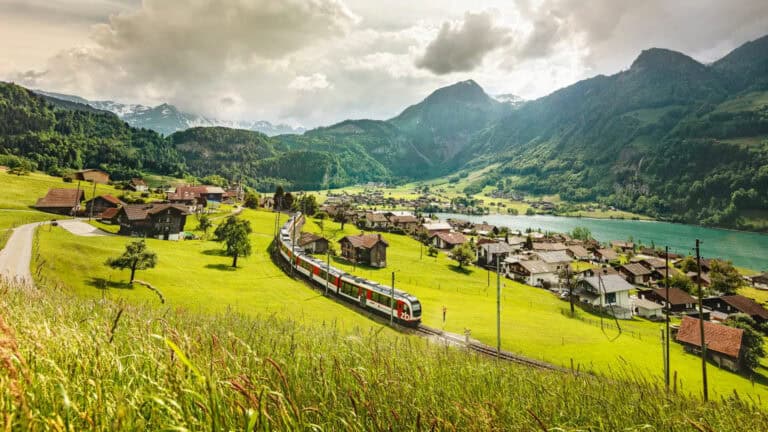
Unlimited train, bus, & boat travel across Switzerland.
 With discounts
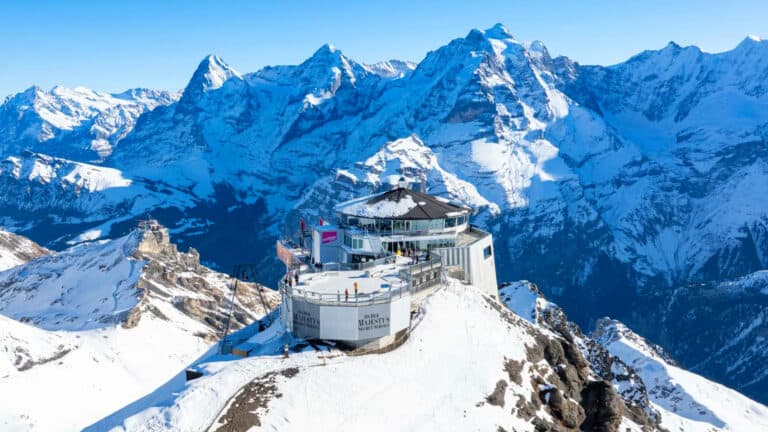
Mountain excursions
Official e-Tickets with pass holder discounts. Skip the ticket counter.
 Unlimited travel
Regional passes
Unlimited travel in the Berner Oberland, Jungfrau Region or Lucerne Region.
Why you shouldn’t underestimate hiking in the Swiss Alps
Hiking in the Swiss mountains isn’t an extreme sport, and the network of mountain trails is very well-maintained and signposted. Still, you shouldn’t underestimate mountain hiking for these reasons:
- High-alpine terrain is easily accessible in Switzerland: anyone can get there and start hiking. Unprepared and inexperienced hikers use the trails too, often overestimating their own capabilities.
- Weather in the Alps can change very quickly. Forecasts can’t always accurately predict sudden local thunderstorms, heavy rain showers, fog, or snow. So even if you start a trail in clear skies, you can run into trouble if you’re caught by unexpected changes.
- Mountain trails can be narrow, run along ravines, or be littered with loose stones and rocks. If you’re not paying attention, you can slip.
Every year, these risks result in many injuries and even casualties.
The 11 main safety rules for hiking in the Swiss Alps
- Don’t underestimate the hiking trail, terrain and weather circumstances. And don’t overestimate your own physical shape, stamina and hiking experience. Choose trails you’re comfortable with and that aren’t too challenging. Better be safe than sorry.
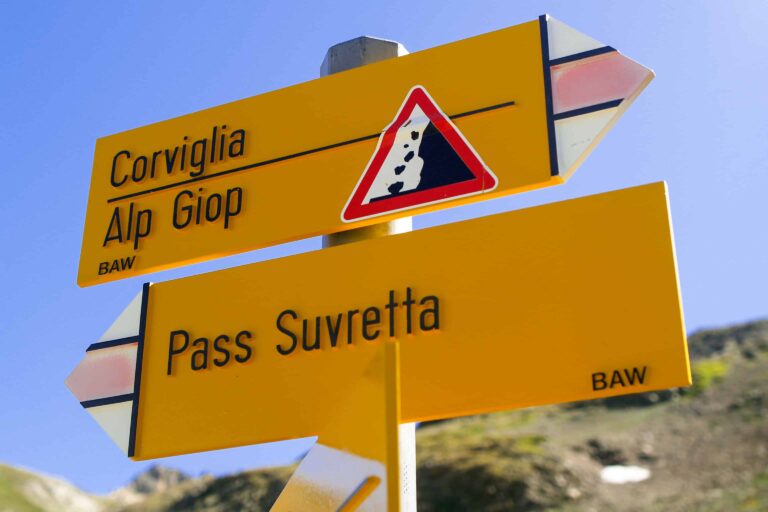
- Do not leave the marked route. There are signposts and marks on rocks, fences, etc. that help you to find your way.
- Trails are mostly not paved. They can be rocky, full of tree roots, narrow, or steep. So concentrate on the trail while walking. Stop to look around and admire the view.
- Do not pause at places with lots of loose rocks on a slope. A stone avalanche might have taken place here and it can happen again.
- Do not pause very close to brooks. They can transform into a lethal torrent of water due to heavy weather conditions elsewhere. This can occur even quicker if the brook or river is also in use to drain away water from a hydro-electric power station. These kinds of power plants can be found a lot in Switzerland. The amount of water can increase dramatically in no time.
- Do not throw rocks down a slope. Even small stones can be dangerous if they land on lower situated hiking trails. They may even cause stone avalanches.
- Keep an eye on the weather and adjust your plan if the weather turns bad. If necessary, take the shortest route back to a nearby village. A pocket-size barometer seems to come in handy. But the weather forecasts provided by such devices (without height correction) become useless when taking it into the mountains, since air pressure varies with altitude. Forecasts on your mobile phone are more useful.
- Have the phone numbers of rescue services at hand (see below), and contact them in case you need immediate medical assistance. Provide clear information about your location. If your phone does not work at your location, go and get help in the valley or the nearest mountain hut. Keep trying whether your phone can be used again while you are on your way down. Don’t hurry too much to prevent more accidents. Leave someone with the victim if possible. Provide the victim with food, drink and a rescue blanket.
- Make sure that someone who’s not hiking along knows which route you’ll take that day.
- Do not wave to helicopters unless you need help. This will prevent rescue helicopters from making an unnecessary landing. If you do need help, then wave with two arms (shape your body like the letter Y).
- Trails may cross fields with cattle. You’re expected to close the fence once you have passed. Do not enter fields unless they’re clearly marked as part of the trail. Cows, in particular when accompanied by calves, can act aggressively when disturbed. Pass them quietly, without sudden moves or hard sounds, and keep at a distance of at least 20 m (65 ft). Do not position yourself between calves and their mother. Do not ever pet or feed cows. Dogs should be kept on the leash when cattle is around. It’s even better to avoid cows altogether when walking your dog. If a cow licks your hand that’s usually a friendly gesture. Still, it’s best to avoid getting close to cows unless there’s a fence between you and the cattle.
4 Swiss hiking etiquette tips
- Do not throw away trash. That includes food. Trash and food scraps are harmful to wildlife. Take it along and dispose of it in the next village or your accommodation.
- Hikers greet each other. If you want to greet like the locals do, you would say “grüezi” (Swiss German), “bonjour” (French) or “buongiorno” (Italian), depending on the region you’re hiking in.
- Make room for one another on narrow paths.
- If you’re about to pass another hiker who is photographing the scenery, wait for a bit so you won’t show up in the picture.
Unlimited travel
Swiss Travel Pass
Unlimited train, bus, & boat travel across Switzerland.
With discounts
Mountain excursions
Official e-Tickets with pass holder discounts. Skip the ticket counter.
Unlimited travel
Regional passes
Unlimited travel in the Berner Oberland, Jungfrau Region or Lucerne Region.
Emergency phone numbers and apps to have at hand
Emergency phone numbers
Store the below emergency phone numbers before hiking:
- Emergency: 112
- Police: call 117
- Fire brigade: call 118
- Ambulance: call 144
- Help in case of poisoning: call 145
- Helicopter rescue: www.rega.ch, or call 1414, 144 or 112
- Helicopter rescue: www.air-glaciers.ch, or call 144 or 112
- Helicopter rescue: www.air-zermatt.ch, or call 144 or 112
Handy apps
Install reliable weather forecast apps too. Find my general recommendations here, and my forecast tips for winter weather here.
In addition, I like having a first-aid app on my phone. The one I installed guides me through the crucial first-aid steps of several common injuries and emergencies, both by audio and by clear images.
More information about weather and clothing
Weather