
 MySwissAlps.com includes
 This post was published by
 Step 1: travel by public transport
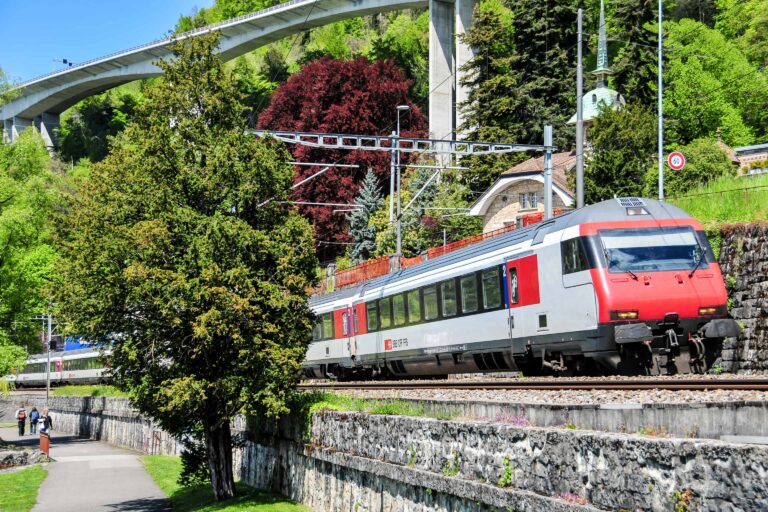
If you can, avoid traveling by plane or car on your way to Switzerland. Choose the train. If you must fly, take a non-stop flight if possible (most fuel is burned during take-off and landing).
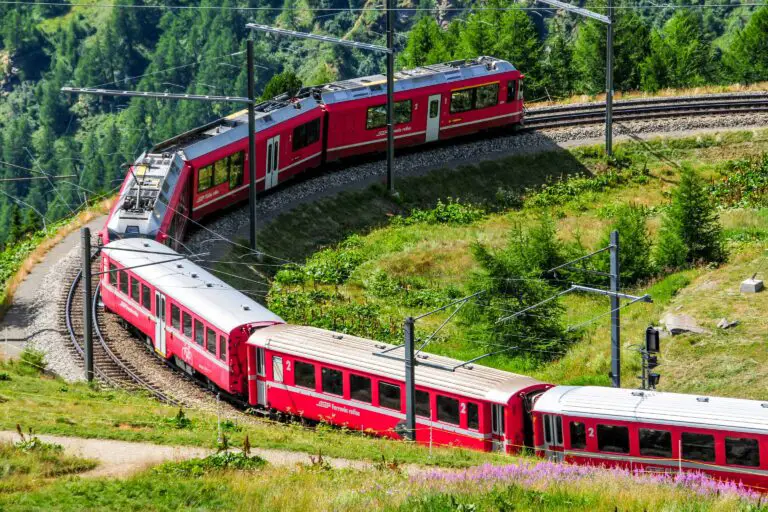
For your travels in Switzerland, I recommend public transport. The Swiss train system is one of the best in the world: it’s clean, safe and comfortable.
Step 2: offset the CO² emissions you cannot avoid
Will you be traveling by plane or by car? Make a small payment to compensate for the CO² emission of those trips. It’s only a fraction of your holiday budget and you’ll make a difference! There are several options:
- Go to co2.myclimate.org/calculate_emissions, calculate the emission of your trip and choose from the various ways to compensate.
- Use the CO² offsetting that may be offered by your airline or car rental company.
- Donate to a verified local CO² offset organization.
Examples of CO² offset prices for your Switzerland trip
- Driving from Amsterdam to Zurich and back in a mid-range car with ethanol fuel causes 0.54 tonnes of CO². A donation of CHF 14 makes your trip eco-friendly.
- A flight from London to Zurich and back causes 0.45 tonnes of CO². A donation of CHF 12 makes your trip eco-friendly.
- A flight from New York to Zurich and back causes 2.3 tonnes of CO². A donation of CHF 57 makes your trip eco-friendly.
- A flight from Singapore to Zurich and back causes 4.3 tonnes of CO². A donation of CHF 107 makes your trip eco-friendly.
Calculate the amount for your trip: co2.myclimate.org/calculate_emissions
What is Myclimate?
Myclimate is a foundation that emerged in 2002 from a project by students and professors at the Zurich university for technology and natural sciences (ETH). Their goal is to protect the climate (and therefore mankind), by creating a society with a high standard of living but very low greenhouse gas emissions.
For us as travelers that means: make our CO² footprint as small as possible, and compensate for the remaining emission.
More information: www.myclimate.org/information/faq
What Myclimate uses your donation for
If you donate to Myclimate, your money will be used to offset your CO² emission. They have many projects around the world to do so. For example, Myclimate invests in reforestation, energy efficiency, renewable energy and climate education.
Step 3: buy local, biological food in Switzerland
This is quite easy in Switzerland. Many Swiss supermarkets offer a wide range of local, biological products. The production chain and transport of such products have less impact on the environment.
Step 4: drink Swiss tap water
Do not buy bottled water. Swiss tap water is just as good and causes much less CO² emissions.
Step 5: separate waste in Switzerland
Switzerland has an extensive system of separating waste. As a tourist, you can contribute to this. You’ll support recycling and you’ll keep Switzerland the clean country it is!
This is how you can separate waste as a tourist:
- If you have plastic waste, batteries, chemicals, paper/carton, glass, plastic, textile, oil/fat or aluminum coffee pods, don’t throw these in regular bins. Instead, find out at which location(s) in your base town waste is collected and bring it there. Hotel staff, the landlord of your rental apartment or the local tourism agency can provide you with detailed locations. These locations are called ‘Abfall-Sammelstelle’ or ‘Wertstoff-Sammelstelle’ in German. They’re often found at central points like the railway station, shopping center, post office, and even supermarkets.
- If you’re staying in a rental home or apartment, the remaining materials should be put in special bags for the local waste processing firm to collect it. An additional tax (‘Sackgebühr’) on these bags pays for the collecting and waste processing. That’s why they’re pretty expensive. If you just need a couple of bags while staying in a vacation rental, your landlord will usually provide some. These bags can often not be found in the shopping section of the supermarket, but only at the checkout or the supermarket kiosk. It is common practice to stuff in as much waste as possible and then put it in a nearby special container or place it on the roadside on the designated day.
- If you stay in a hotel, the hotel will largely take care of collecting and separating your waste. But at train stations, you can still separately dispose of the basic stuff like plastic bottles and paper.
- Don’t throw away waste while you’re traveling or hiking. Keep it with you and dispose of it in public bins at railway stations, supermarkets and other central points. Most railway stations provide separate bins for paper, glass and plastic.


Climate change in Switzerland
Practical planning guide