

 MySwissAlps.com includes

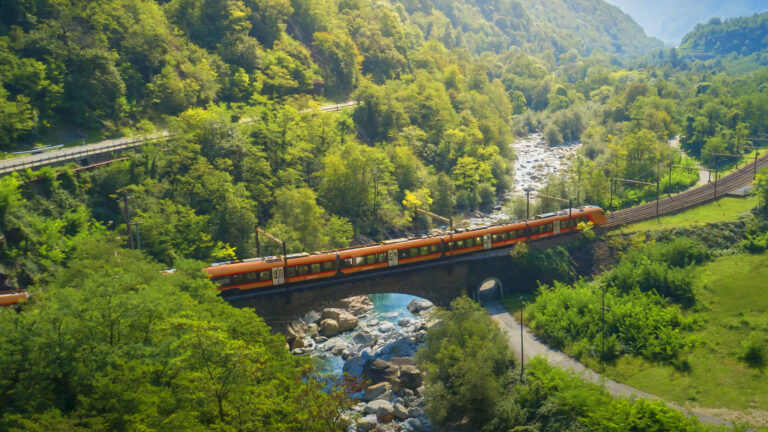 Unlimited travel
Swiss Travel Pass
Unlimited train, bus, & boat travel across Switzerland.
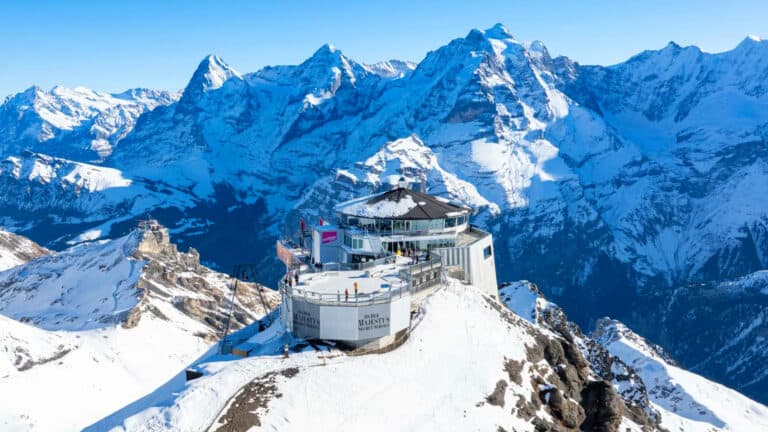 With discounts
Mountain excursions
Official e-Tickets with pass holder discounts. Skip the ticket counter.
 Unlimited travel
Regional passes
Unlimited travel in the Berner Oberland, Jungfrau Region or Lucerne Region.
Do I need a visa to enter Switzerland?
- Citizens of the EU and Schengen countries, plus citizens of many third countries, can enter Switzerland without a visa.
- Citizens of other third countries do need a visa to enter Switzerland and other Schengen countries.
Examples of third countries from which travelers do not require a visa for Switzerland:
- Australia and New-Zealand
- Brazil
- Canada
- Hong Kong
- Israel
- Japan
- Malaysia
- Singapore
- South Korea
- United Arab Emirates
- United Kingdom
- United States
Examples of third countries from which travelers do require a visa for Switzerland:
- China
- Egypt
- India
- Indonesia
- Pakistan
- Philippines
- Qatar
- Russia
- Saudi Arabia
- South Africa
- Thailand
Exceptions for visa-requiring citizens
If you need a visa for Switzerland, there may be an exception if you:
- already have a type-D visa issued by a Schengen state, valid for the period in which you’ll visit Switzerland.
- have a residence permit for EU or Schengen countries.
Details for your home country
Check which rules apply to your home country:
Which Swiss visa types exist?
Type C: Schengen visa
This is also called a short-stay visa, travel visa or tourist visa. You can use it in Switzerland and other Schengen countries for a maximum of 90 days. This is often the only visa that’s relevant for tourist trips to Switzerland.
There are sub types:
- multiple-entry visa, allowing you to enter and leave the Schengen area as often as you want;
- single-entry visa, allowing 1 entry to the Schengen area and expiring once you leave;
- double-entry visa, allowing 2 entries to the Schengen area and expiring once you leave for the second time.
Type A: Airport transit visa
This is required for tourists from a few countries only, if they transit from one non-Schengen country to another non-Schengen country, via an airport in the Schengen area (for example Switzerland).
This airport transit visa is required if you’re a national from Afghanistan, Iraq, Bangladesh, Nigeria, Congo, Pakistan, Eritrea, Somalia, Ethiopia, Sri Lanka, Ghana, or Iran. If you already have a travel visa issued by a Schengen state, you don’t need an additional airport transit visa.
Type D: Residence permit
You need this visa if you plan to stay longer than 90 days. It’s valid in Switzerland only.
Other Swiss visas
Other Swiss visas include:
- work permits;
- student permits;
- medical permits for a health treatment in Switzerland;
- culture-, sports- and events-related permits.
How much does a Swiss travel visa cost?
Prices for the type C/Schengen visa are fixed for the entire Schengen area. The fees are:
- EUR 90 per adult
- EUR 45 per child from 6 to 12 years old
The visa is free for several people, including:
- children younger than 6 years old
- family members of an EU/EEA national
- pupils, students, and accompanying teachers during a school trip
Unlimited travel
Swiss Travel Pass
Unlimited train, bus, & boat travel across Switzerland.
With discounts
Mountain excursions
Official e-Tickets with pass holder discounts. Skip the ticket counter.
Unlimited travel
Regional passes
Unlimited travel in the Berner Oberland, Jungfrau Region or Lucerne Region.
How long is my tourist visa valid?
Duration of a Schengen visa
The typical duration of a type C/Schengen visa is:
- For a single-entry visa: from your first to your last day in the Schengen area, with a maximum of 90 days within a period of 180 days.
- For a double-entry visa: from the first day of your first visit to the Schengen area to the last day of your second visit to the Schengen area, with a maximum of 90 days within a period of 180 days.
- For a multiple-entry visa: 90 days (in which you can enter and leave the Schengen area as often as you like) within a period of 180 days.
Your visa may also be issued for a shorter period, though. And in some cases, Schengen visas with longer validity can be issued. You’ll have to prove that you need to travel to the Schengen area frequently.
Use the Schengen visa calculator to check how many days you have left on your visa.
Can I extend my Schengen visa?
You normally can’t extend a Schengen travel visa. This is only possible if you can prove that you need to stay in the Schengen area. Contact the immigration authorities of the Swiss canton you’re staying in for details.
What if my visa expires before I enter or leave Switzerland?
If you can’t enter Switzerland before your visa expires, you’ll have to apply for a new visa. Contact the Swiss representation in your home country.
If you can’t leave Switzerland before your visa expires, for example due to a canceled flight or other unexpected circumstances, contact the immigration authorities of the canton in which you’re staying. Do this as soon as possible. Being in Switzerland with an expired visa (also called ‘overstaying’) is punishable.
If you’re at an airport while your visa expires, contact the airport border authorities.
Where is my visa valid?
A type C/Schengen visa is valid in all Schengen countries.
A type A/airport transit visa is valid in the international transit area of a Schengen airport.
Unlimited travel
Swiss Travel Pass
Unlimited train, bus, & boat travel across Switzerland.
With discounts
Mountain excursions
Official e-Tickets with pass holder discounts. Skip the ticket counter.
Unlimited travel
Regional passes
Unlimited travel in the Berner Oberland, Jungfrau Region or Lucerne Region.
Where, when, and how to apply for my visa?
How long does it take to receive my visa, and when should I apply?
The processing time for a Schengen travel visa is about 2 weeks/15 days. You’ll usually receive your visa within that period. But in some cases it takes longer: up to 30 or even 60 days.
You can mostly apply no earlier than 6 to 3 months before your planned entry in Switzerland or another Schengen country. My advice is to apply between 3 and 2 months before departure.
I’ll be visiting multiple Schengen countries: for which country to apply?
Apply for your Schengen visa for the country in which you’ll be spending most days.
If you’ll spend an equal number of days in several Schengen countries, then apply for the country in which you’ll first enter the Schengen area.
Can I apply online?
You can’t entirely apply for a Schengen visa online yet, but there are plans to implement a digital application system.
What’s the application process?
If Switzerland is the Schengen country in which you’ll spend most of your stay, this is how to get your travel visa in short:
- Fill out a Swiss application form.
- File this to the Swiss representation in your country, along with the required documents.
- Schedule an interview at the embassy in your country.
How can I start my application?
Depending on your country, one or more of these application options apply:
- Fill out an online application form via the Swiss application platform.
- Download and print an application form, and fill it out by hand.
- Apply directly at the Swiss representation in your home country. Find addresses at www.eda.admin.ch. Pick “Travel advice and representations” from the top menu and then “Selection of countries and territories”.
- Apply online via an external visa service provider.
Check which application options are available for you at www.swiss-visa.ch.
Can I arrange for my visa upon arrival in Switzerland?
You can’t apply for your visa when you arrive in Switzerland. You can only get a visa at the border or airport in very exceptional cases. You’ll have to prove that you weren’t able to get it before entering, due to time constraint and unavoidable circumstances.
If a visa is granted in such cases, it has limited validity.
Questions on the visa application form
This is the information you need to fill out on the Swiss visa application form:
- basic personal details: your name, date and place of birth, nationality, sex and civil status. Such data must match the information in your passport or other travel documents.
- details about your passport or your other travel document: its type, the date of issue, the date until which it’s valid and the authorities by which it’s issued;
- your professional occupation;
- details about your travel plans. You’ll have to mention the purpose(s) of your trip to Switzerland and the number of entries you require in the Schengen area. You must also fill out the dates of entering and departing from the Schengen area.
- addresses of hotels and holiday homes, or information about the persons or companies that invited you;
- the way(s) in which you’ll pay for your stay (cash, cheques, credit card, prepaid accommodation, et cetera);
- your signature.
Document checklist for a Swiss visa application
These are the documents you often need for your visa application:
- a filled-out visa application form;
- your passport or another travel document;
- biometric data, such as 1 or 2 recent passport-size pictures;
- visa that have been issued to you previously;
- a cover letter explaining the purpose of your visit. If you make a tourist trip, you can describe your travel plan in this letter.
- a travel health insurance policy;
- plane, train or bus reservations for your trips to and from Switzerland;
- proof of accommodation, such as hotel reservations, or an invitation by a Swiss host;
- proof of your financial status, such as salary slips, bank account statements, or your business registration certificate.
Questions asked during a visa interview
When filing your application, you’ll have an appointment at the Swiss representation in your home country. This can happen in person or online. Biometrical data can be collected. Often, you’ll also have an interview. This helps to establish if you qualify for a visa.
You can expect questions about the information on your application form and the required documents. Personal questions can be asked too, for example about:
- your marital status;
- your family situation;
- the person(s) you’ll be traveling with;
- your work or student activities, your educational qualification, and your future ambitions;
- your financial status;
- the reason(s) for your intended trip;
- other details of your trip, such as the locations in which you’ll be staying;
- your knowledge of the country or countries you plan to visit;
- your previous travels.
Differences per country
The exact requirements can differ per country. Check details for your country at www.eda.admin.ch.
Where to get help with my application?
Use the official FDFA (Federal Department of Foreign Affairs) helpline if you have questions about your Swiss visa application or other entry requirements.
What if my application is rejected?
Costs for a Schengen travel visa are not refundable, not even in case of a rejection.
You can either re-apply, or you can appeal within 30 days after receiving the refusal. This must be done in writing in German, French or Italian. The letter must be directed to the Swiss State Secretariat for Migration (SEM).
What does my travel visa look like and what information does it contain?
What does my travel visa look like?
Your Schengen visa is a sticker in your passport. It’s in English, French or German.
What information does the Schengen visa sticker contain?
Your Schengen visa sticker shows these data:
- the states in which you can enter. For a regular tourist visa, the sticker will mention “Schengen states”, meaning you can travel in all Schengen countries. In exceptional cases, visas are issued for only one country or a few countries. In that case, the acronyms of these countries are mentioned. “CH” (Confoederatio Helvetica) stands for Switzerland.
- the start and end date of your visa validity;
- the number of entries you can make into the Schengen area. The sticker mentions the exact number of allowed entries, or “MULT”. This means you can enter and leave the Schengen area as often as you want within the validity period.
- a letter indicating the visa type, which is “C” for the tourist short-stay visa;
- personal information, such as your passport number and name.
Is there an electronic or digital travel visa?
A Schengen visa is not available in electronic or digital format. This may change in the future.
The ETIAS is fully digital, but that’s something different: see below.
Unlimited travel
Swiss Travel Pass
Unlimited train, bus, & boat travel across Switzerland.
With discounts
Mountain excursions
Official e-Tickets with pass holder discounts. Skip the ticket counter.
Unlimited travel
Regional passes
Unlimited travel in the Berner Oberland, Jungfrau Region or Lucerne Region.
Which requirements apply to entering Switzerland, other than a travel visa?
All travelers: valid travel documents
All travelers must be able to show a valid travel document when entering Switzerland. Examples are passports, emergency or temporary passports, ID cards, and travel documents for children.
For third-country travelers, the travel document must meet these requirements:
- It’s issued no longer than 10 years before entering the Schengen area.
- It’s valid for at least 3 months after departure from the Schengen area.
Check which travel documents from your country are recognized:
- Recognized travel documents from EU and Schengen countries: ec.europa.eu
- Recognized travel documents from other countries: ec.europa.eu
Travelers from all third countries: proof of your plans in Switzerland
If you’re a third-country national, with or without visa, you can be questioned at the Swiss border or airport. You must be able to demonstrate the purpose of your visit, the Swiss locations of your stay, and your financial resources.
I advise that you have the following documents:
- a return plane, train, or bus ticket from and to your home country, which is valid within 90 days upon arrival. Or show a ticket for a journey to a country outside the Schengen area, valid within 90 days upon arrival. If a visa is required for the non-Schengen country you’ll be traveling to, you must be able to show this too.
- if you’re staying in hotels or holiday homes: (a copy of) your reservation confirmations;
- if you’re staying in a private household: (a copy of) the letter of invitation from your hosts;
- proof of your ability to pay for your stay in Switzerland. Count on CHF 100 per day. You can show this with cash, traveler’s cheques, credit cards, or bank guarantees.
Travelers from visa-free countries: ETIAS
Starting from the last quarter of 2026, third-country citizens who don’t require a visa will have to apply digitally for an ETIAS authorization before entering a Schengen country. Find more information below.
Temporary, exceptional situations
In exceptional cases, Swiss entry rules can be changed. Examples are:
- the requirement of extra entry documents. An example is an entry form or passenger locator form in times of health crises, such as the COVID pandemic.
- the requirement of proof of vaccination, or a health declaration;
- a temporary suspension of visa applications.
What if I lose my travel documents in Switzerland?
If you lose a travel document, such as your passport, contact the diplomatic or consular representation of your home country in Switzerland as soon as possible.
If you lose your visa, immediately contact the migration authorities of the Swiss canton you’re staying in.
You’re not required to take along copies of your travel documents and/or your visa. But it helps if you can present such copies in case of loss or damage. In most cases, you’ll be able to get a replacement travel document or visa.
About EES and your arrival in Switzerland
What is EES and what’s it for?
The “Entry/Exit System” or EES is a digital European system that collects and stores data of third-country visitors to Europe. It’s meant to make border checks easier and to make Europe safer.
Examples of data that’s stored:
- personal data as listed in your passport
- the data and place of each entry and exit
- biometric data, such as fingerprints and a facial image
When is EES being implemented?
The EES is gradually implemented in European countries, including Switzerland. It’s planned to be completed by 10 April 2026.
Who is EES (not) for?
EES is meant for travelers from non-European countries. Or, more precise: from countries that do not use EES. There are exceptions to these rules, such as:
- nationals from Cyprus, Ireland, Andorra, and Monaco
- non-EU nationals with a residence card, residence permit, or long-stay visa
Will EES affect my arrival in Switzerland between until April 2026?
The EES is be implemented gradually and planned to be fully operational by April 2026. During the implemenation phase, your data may be collected and/or registered if you enter Switzerland (or if you make other border crossings in Europe), but that’s not a given.
How will EES affect my arrival from April 2026?
From April 2026, EES should be fully operational. You can then expect your data to be collected once you enter a European border crossing point for the first time since the introduction of the EES. Passport control officers will scan your fingerprints or take a photo of your face. So:
- If Switzerland is the first EES country you’ll be arriving in since the EES introduction, it’s best to plan sufficient time to have your data collected. And don’t buy a time-specific travel ticket to get to your first destination (such as a Supersaver ticket).
- If your data has already been collected at another EES border crossing point before you enter Switzerland, it will only be verified once you enter Switzerland. That will be a much quicker process.
Can I speed up the data collection process?
In some cases, you can, by registering some of your data in advance. This can be done by a mobile application (not available for all EES countries) or a self-service system (not available at all border crossing points).
About ETIAS and your pre-travel application (from late 2026)
What is ETIAS, and what’s it for?
ETIAS stands for European Travel Information and Authorisation System. It issues a digital travel authorization before your trip. ETIAS is meant to enhance safety in the Schengen area. The system will assess if a third-country citizen poses no threat to the Schengen countries.
When is ETIAS being implemented?
Implementation is scheduled for the last quarter of 2026.
Who is ETIAS (not) for?
Travelers from visa-exempt third countries have to apply for ETIAS. Examples of visa-free third countries are Australia and New-Zealand, Brazil, Canada, Hong Kong, Israel, Japan, Malaysia, Singapore, the UAE, the UK, and the US.
How does ETIAS work?
Before your trip, you’ll have to fill out personal details such as your name, surname, gender, nationality, and e-mail address in an online form. This takes about 10 minutes. The application must be paid for by credit or debit card.
Processing will generally take just a few minutes. If additional data or screening is required, processing may take between 4 and 30 days.
An application will probably cost CHF 7 per person. It will be valid for 3 years, or until the end of your travel document (e.g. passport) validity.
During your trip, your ETIAS authorization can be checked by airline or cruise companies and by border officials.
Which countries belong to the EU, EFTA, Schengen and EEA?
What does Switzerland belong to?
Switzerland belongs to EFTA and Schengen, but not to the EU and not to the EEA.
The EU countries
The EU (European Union) consists of 27 countries: Austria, Belgium, Bulgaria, Croatia, the Republic of Cyprus, the Czech Republic, Denmark, Estonia, Finland, France, Germany, Greece, Hungary, Ireland, Italy, Latvia, Lithuania, Luxembourg, Malta, Netherlands, Poland, Portugal, Romania, Slovakia, Slovenia, Spain and Sweden.
The EFTA countries
The EFTA (European Free Trade Association) consists of 4 countries: Iceland, Liechtenstein, Norway and Switzerland.
The Schengen countries
The Schengen area consists of 25 EU countries and all 4 EFTA countries. Within this area, Schengen residents can travel without border controls. All 29 Schengen states are: Austria, Belgium, Bulgaria, Croatia, the Czech Republic, Denmark, Estonia, Finland, France, Germany, Greece, Hungary, Iceland, Italy, Latvia, Liechtenstein, Lithuania, Luxembourg, Malta, the Netherlands, Norway, Poland, Portugal, Romania, Slovakia, Slovenia, Spain, Sweden and Switzerland.
The EEA countries
The EEA (European Economic Area) consists of all 27 EU countries and 3 of the EFTA countries: Iceland, Liechtenstein and Norway.
- www.sem.admin.ch: Swiss government visa and entry information
- www.swiss-visa.ch: Swiss visa application platform
- www.schengenvisainfo.com: information about the Schengen visa
- www.eda.admin.ch: Swiss government embassies and representations in other countries
- www.blv.admin.ch: Swiss government entry rules for pets
- www.travel-europe.europa.eu: official ETIAS website
- www.travel-europe.europa.eu: official EES website
- www.etias.com: ETIAS application website