
 MySwissAlps.com includes
 This page was last updated by
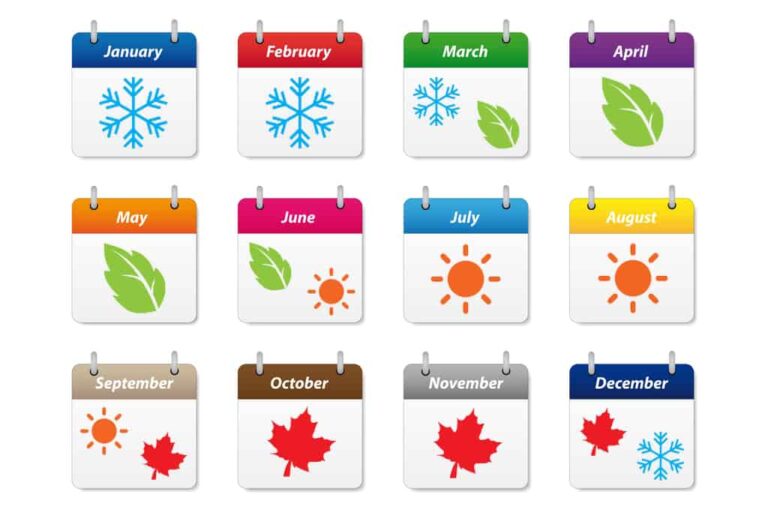
 What’s the best time to visit Switzerland?
For hiking and summer holidays, July to September is perfect. For winter sports or simply enjoying the snow, January to mid-March is best.
If you are well prepared, you’ll have a wonderful trip regardless of the time of year.
What’s the best month to visit Switzerland?
One of the best months to visit Switzerland is September. The weather is generally pleasant and allows for all activities except winter sports. It’s just after the summer high season, so it’s less crowded.
I personally prefer late March-April-May and late October-November. Even though not all mountain transport is operational, nature is beautiful with contrasts between the green valleys and snow-capped mountains. It’s much quieter than in June-September.
Should I visit Switzerland in summer or in winter?
Summer is all about outdoor activities such as hiking. Winter is suitable for snow activities and cosy city trips. Sightseeing and scenic trips can be done year-round.
In summer:
- the entire country has a lot to offer, from the lakes in the lowlands to the Alps.
- weather is mild to hot.
- you can enjoy hiking, mountain visits, boat rides and train journeys in lush green landscapes.
- popular places can get crowded. There are many tourists from abroad, especially in high season (June-August).
In winter:
- most tourists focus on the Alps: that’s where snow can be found.
- weather ranges from mild and rainy, to freezing and snowy.
- the main activities are skiing, snowboarding, winter hiking and other snow activities. City trips are attractive too.
- there are fewer intercontinental tourists. Swiss citizens and visitors from neighboring countries practice winter sports in the mountains. Popular peaks and ski resorts can get crowded.
Video 
January/February: winter high season
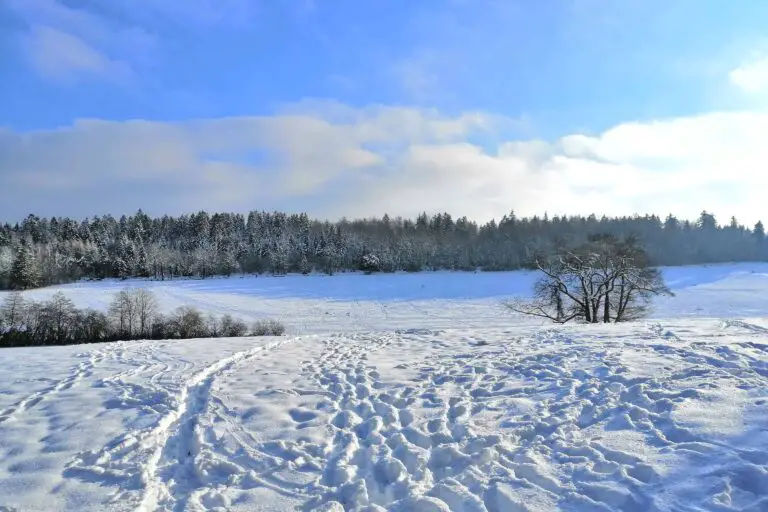
These are real winter months. It’s cold and days are short. There are good chances of snow from elevations of 1500 m. There can also be snow in the lower valleys and larger cities, but huge amounts are unlikely there.
Here’s what to see and do:
- This is a good time for winter sports and city trips.
- Hiking is only possible in lower elevations, or on prepared winter trails in the mountains.
Suitable destinations:
- Enjoy the snow in the Upper Engadine, Zermatt or the Jungfrau Region.
- Visit historical cities such as Bern and Lucerne.



March: late winter, early spring
March is when the first signs of spring can be found in warmer regions around the lakes in southern Switzerland. It’s pretty chilly in most regions though. In the mountains, it can still be winter with lots of snow.
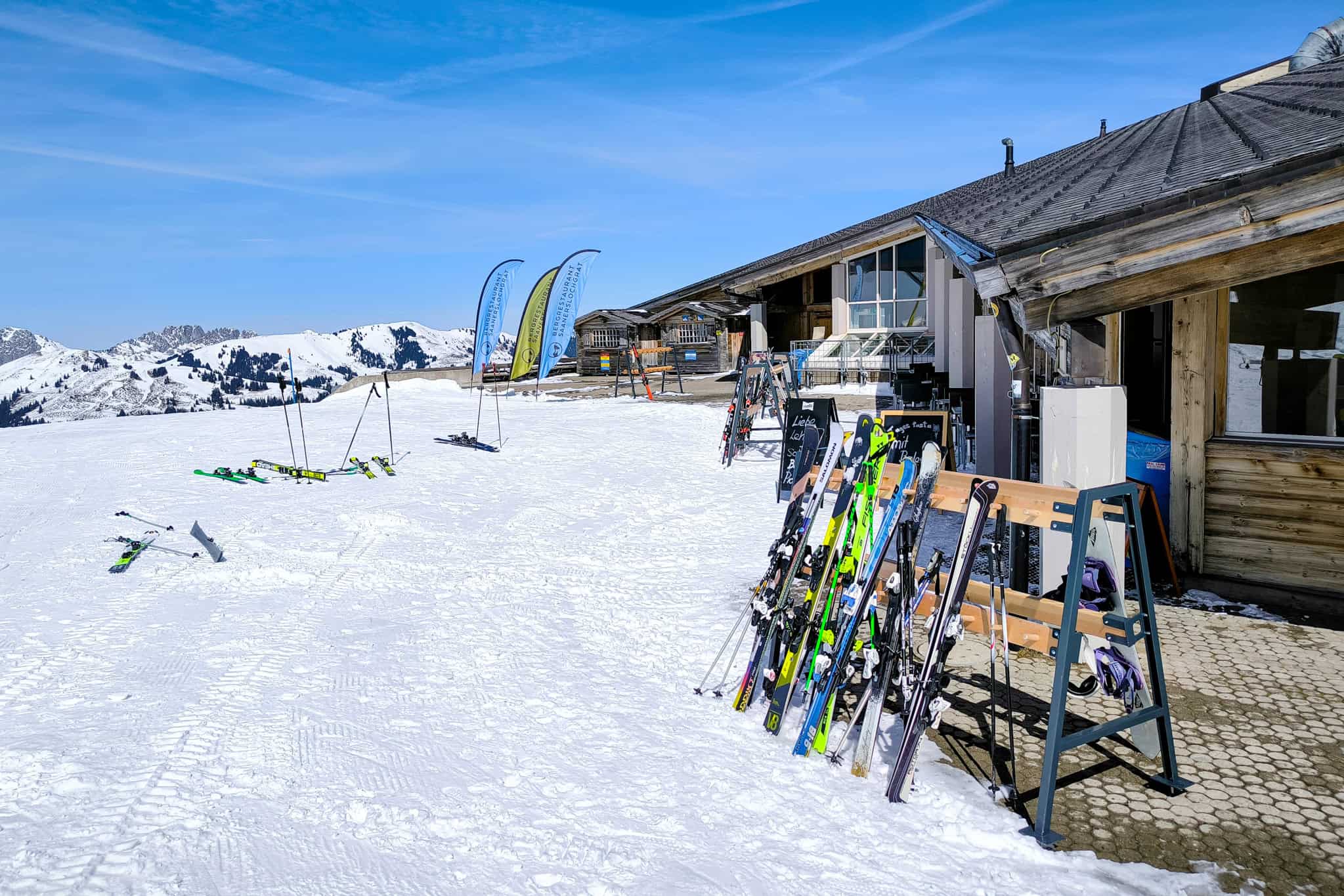
It’s low season in larger towns and valleys. But the lifts in high ski resorts will normally be operational. This means that mountain trips can still be crowded: especially the early mountain rides when skiers and snowboarders travel up. Lower ski resorts may close in March.
My tips:
- Lake Geneva, Lake Lugano and Lake Maggiore are warmer Swiss regions to enjoy an early spring.
- Visit higher mountain tops for wintry panoramas.
- Make scenic train rides, but check timetables as it’s low season.

April/May: spring low season
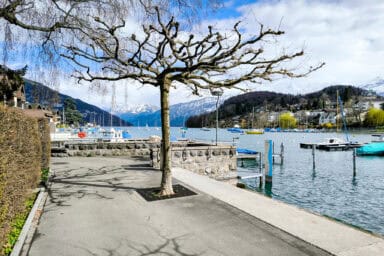
Some ski options are still available in April, and popular mountain tops with many ski runs can still be crowded in the morning. Most ski resorts will be closed by the end of April. Spring is coming, especially in the lowlands and around the lakes.
The months between winter and summer are reasonably quiet: some hotels are closed, as well as cable cars. There is still plenty to do and see, but you need to prepare and check timetables beforehand.
What to see and do:
- More and more hiking trails will be accessible. By late April/early May, trails up to 2000 m should mostly be clear of snow, but they can still be muddy. This is not a guarantee and varies each year.
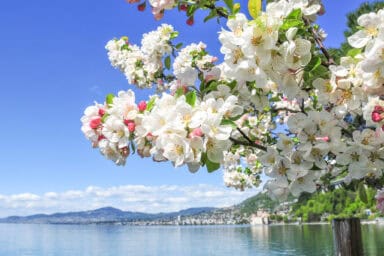
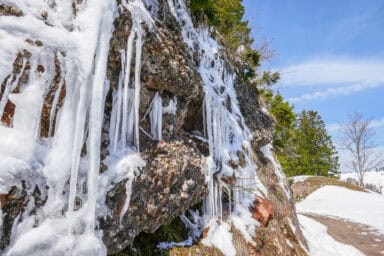
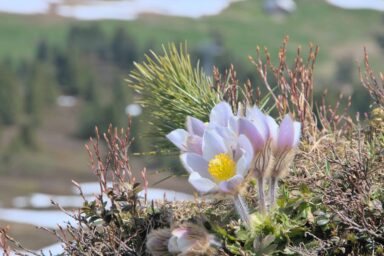
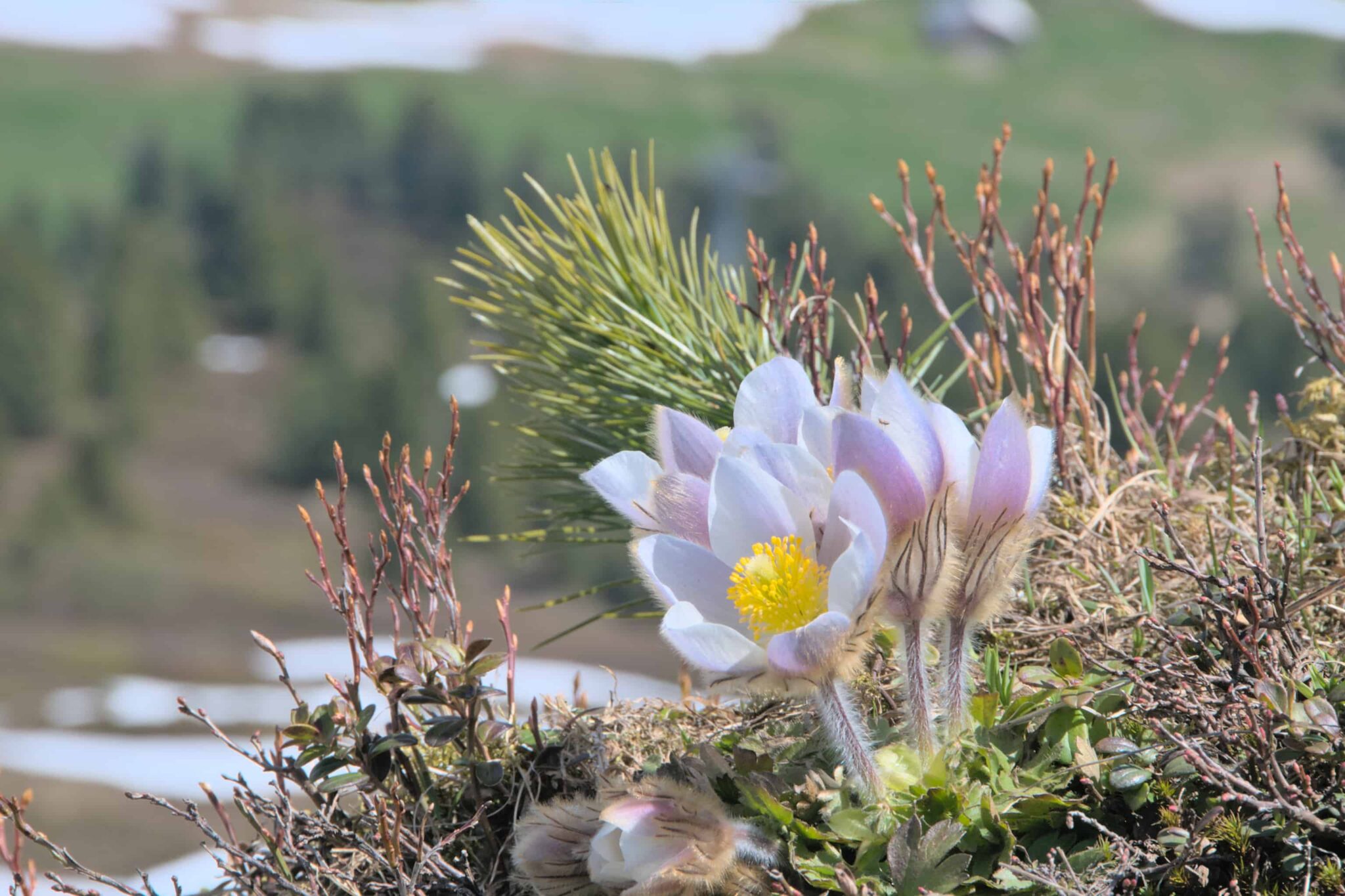
- You’ll see wonderful flowers in the valleys and halfway up the mountains. Waterfalls are pretty too, as this is the time of year when snow in the mountain melts.
- Scenic train rides can be done year-round. And the scenery is wonderful: you can see both the remains of winter and green valleys.
Suitable areas are Lake Lucerne and Lake Thun: they offer plenty of hiking and sightseeing options in this season.


June: early summer
Summer has started. There’s daylight from about 5:30 AM to 9:30 PM, and the weather is mild or warm. It’s not as busy as July and August, but you can expect popular excursions to be pretty crowded already.
My region and activity tips:
- This is a wonderful time for hiking. The highest trails may still be inaccessible because of snow, but the majority will be open. The flowers and waterfalls are beautiful, just like in May.
- Cable cars and cogwheel trains that were closed in low season will be operational again.
- By late June, all pass roads that were closed for winter should be open. Opening dates vary per season and per pass.
As for regions: Central Switzerland is wonderful in June, as well as the Ticino for example.


July/August: summer high season
This is what to expect of the weather and scenery:
- Although the weather varies by the day throughout the year, it’s usually pretty warm in July and August. Average temperatures are rising because of global warming.
- Some days can even be too hot to enjoy city trips or strenuous hikes.
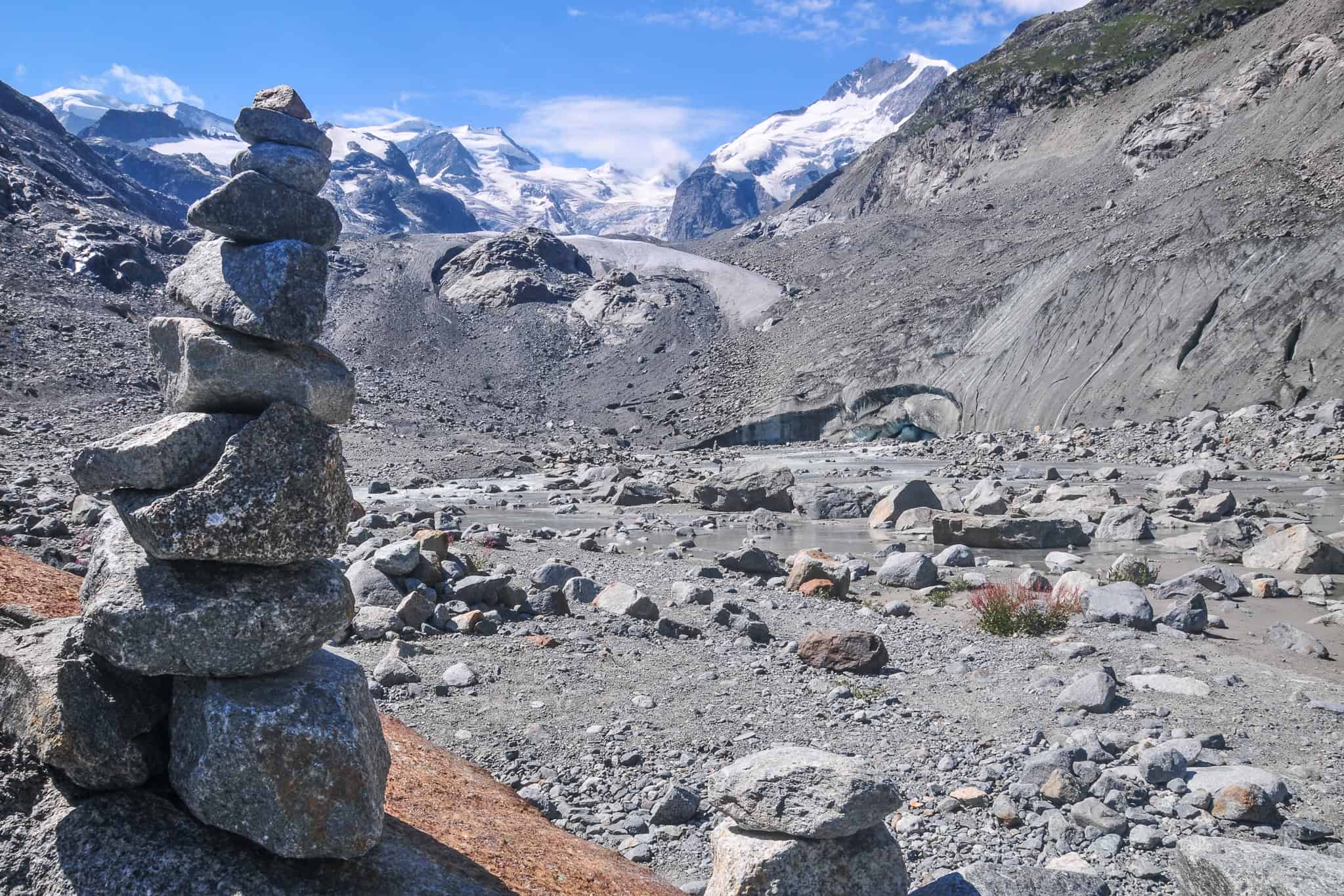
- There’s less snow on the peaks than in other months. The scenery is more rocky.
- Glaciers tongues are melting.
Summer has traditionally been popular among tourists in Switzerland, just like winter. Popular tourist areas can get busy or even crowded.
Overall, this is the time for outdoor activities:
- Enjoy hiking, biking, paragliding and other sports.
- Visit the many mountain peaks for great views and activities.
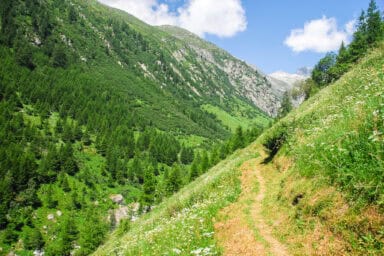
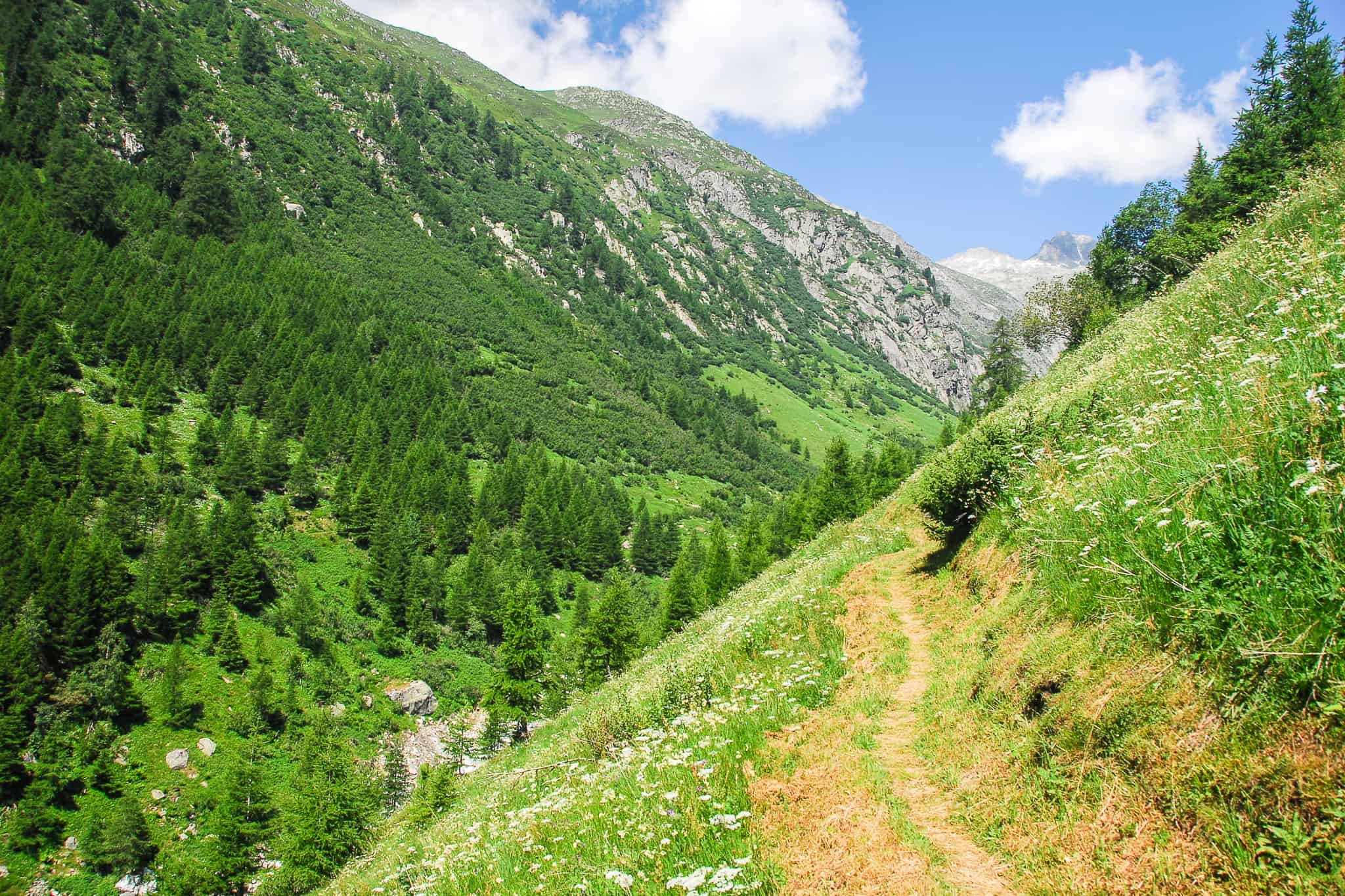
- It’s a perfect time for hiking in high terrain. By mid-July, these trails should be clear of snow. Even at high altitudes, you’ll see beautiful alpine flowers.
The highest peaks in the Bernese Oberland, Graubünden and Valais are very attractive in summer.


September: late summer and perfect for outdoor activities
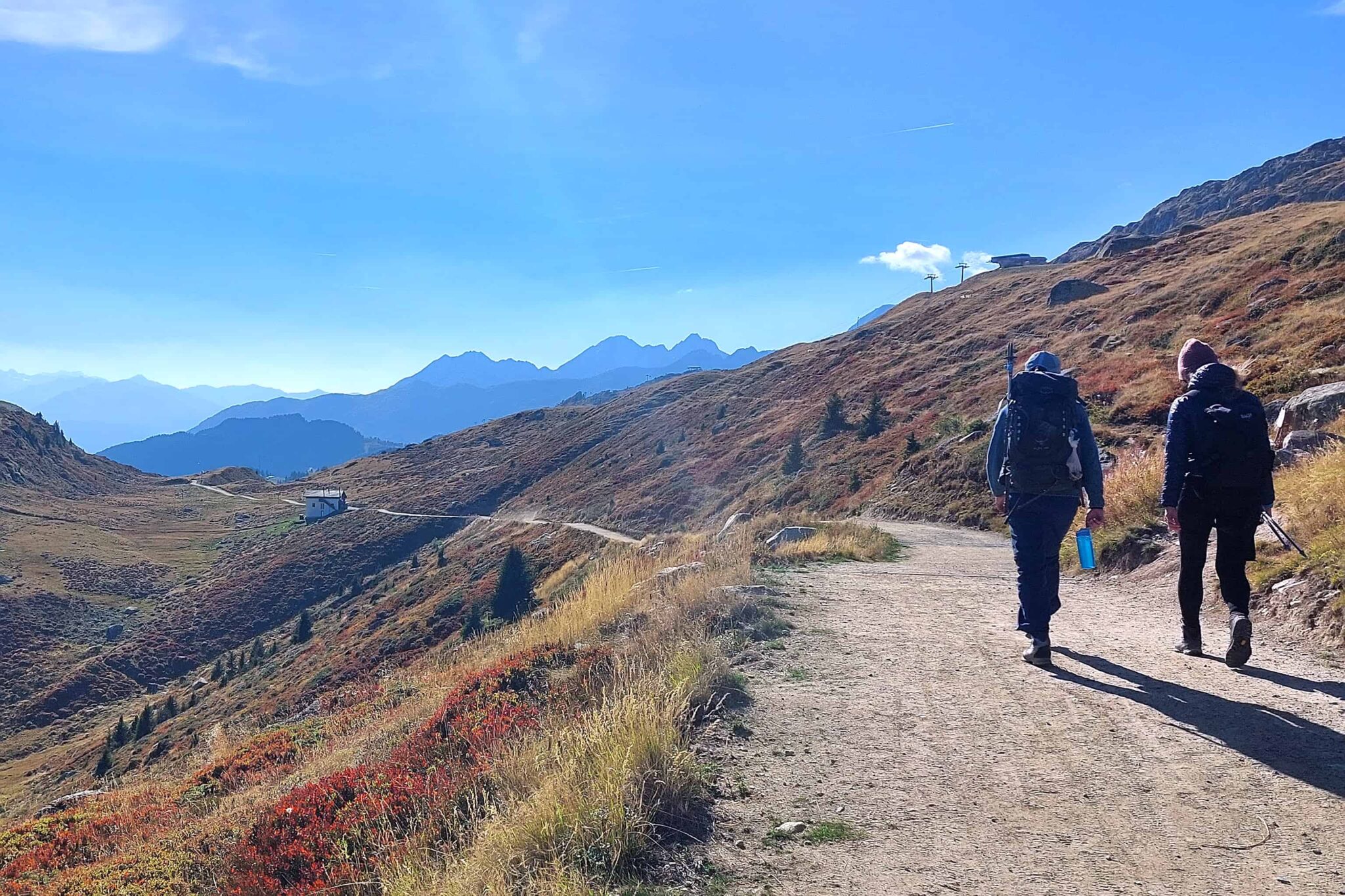
September is a wonderful month that is still summery, but usually not as hot as July and August. Also, the air is mostly less moist, and therefore better for clear panoramic views. By the end of the month, you can enjoy the first signs of fall when leaves start to color.
What to do:
- September is considered the best month for high-altitude hiking.
- It’s also very suitable for other outdoor activities.
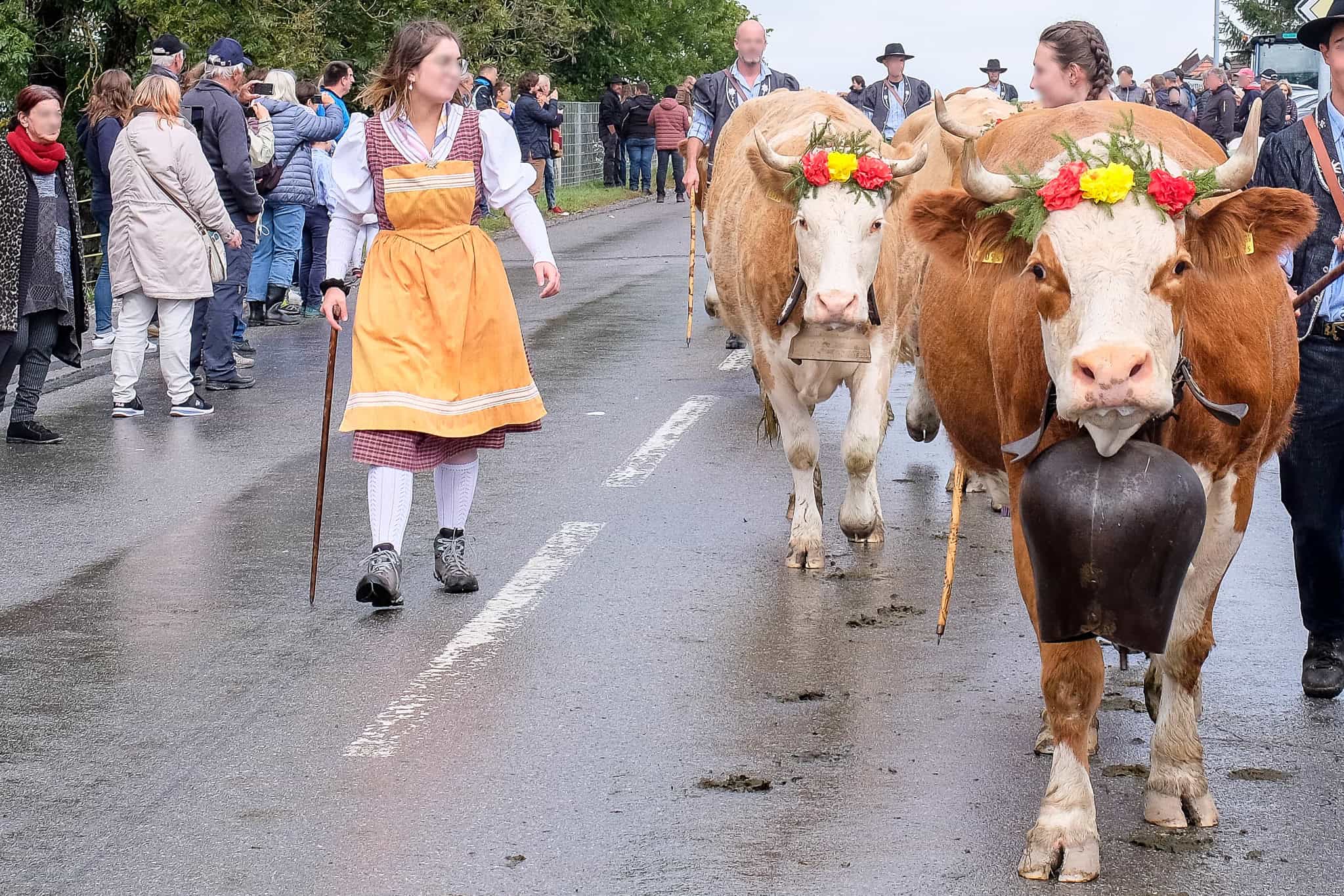
- In late summer and early autumn, you can visit several festive “Alpabzug” events, when the cattle that have grazed in the mountains are led back down to the valleys.
All regions recommended for the summer high season are still wonderful now, but so are the lake areas recommended for October.


October: fall low season
The weather can still be pretty mild in October, although this is fall and it might as well be chilly. The first snowfall will occur in the mountains. Days are getting shorter. You can expect wonderful autumn colors in Switzerland’s forest areas.
Plan your trips carefully:
- There are still lots of opportunities to hike, but higher trails may get snow-covered, especially in the second half of the month.
- Cable cars and cogwheel trains may either close around this time, or not operate for a week or two because of maintenance.
- Pass roads start to close for winter in October.
Lake areas like Lake Geneva, Lake Lucerne, and Lake Lugano are still lovely in October. So is the Engadine in Graubünden, where the conifers take on splendid autumn colors.
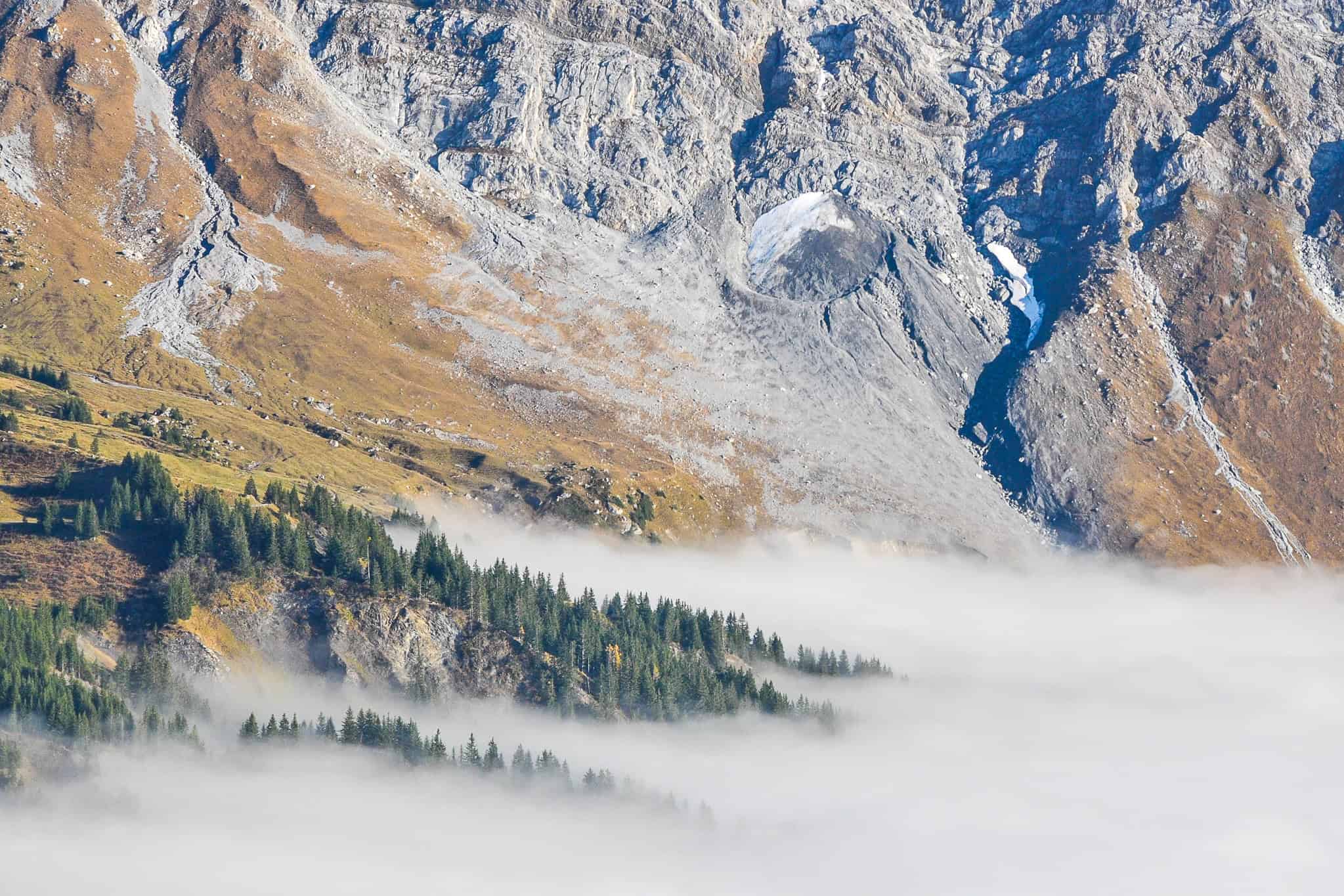


November: low season and chilly
Things are getting chilly in November, although anything is possible weather-wise: from mild days to snow. The first ski slopes of high winter sport resorts like Zermatt, Saas-Fee and Verbier may open, but this is definitely not guaranteed.
Many lower hiking trails will still be open, but you have to carefully check the conditions. It’s low season: cable cars and cogwheel trains may close for maintenance, so planning ahead is essential.
I recommend a base in a central larger town or city, so you’ll have plenty to do, regardless of the weather.

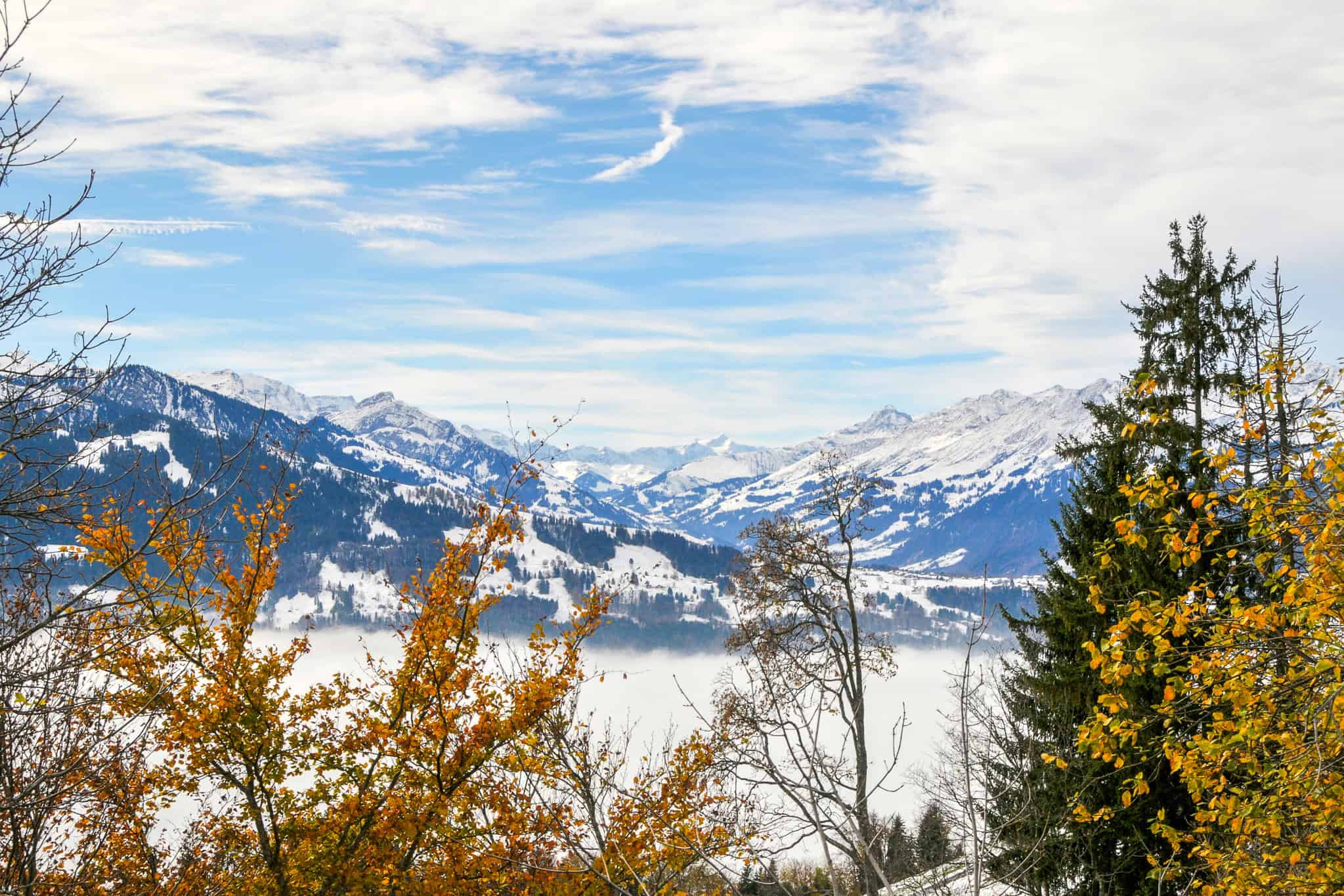
December: Christmas atmosphere and early winter
December marks the transition to winter. The first half of the month is similar to November. Winter should set in during the second half. Days are really short, which is very cozy in the Swiss cities. December is a good time to visit Christmas markets and make city trips.
What to expect in terms of weather and snow:
- Nowadays, snowfall tends to start later in the season due to global warming. A white Christmas is not a guarantee, although still common in the high mountains.
- Don’t expect snow in the valleys and large cities like Zurich. It’s possible but uncommon.
It’s still low season until mid-December. When Christmas approaches, things get lively and winter sports resorts open up. The two weeks around Christmas and New Year are the most popular weeks of the year among tourists.
My advice for base towns and regions:
- Some of the best Swiss cities in December are Basel, Bern, Lucerne, Montreux, and Zurich.
- To increase your chances of a white Christmas, you can consider Saas-Fee, St. Moritz, and Zermatt.


More about weather, time, and winter season in Switzerland
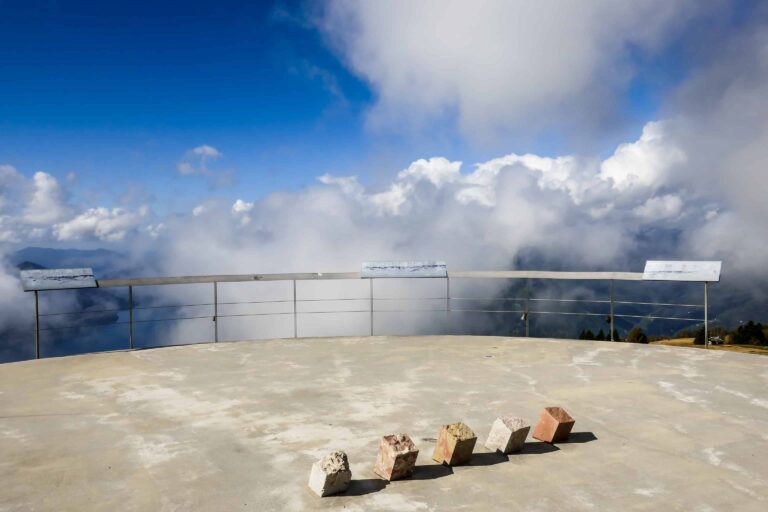
Weather
Time in Switzerland