
 MySwissAlps.com includes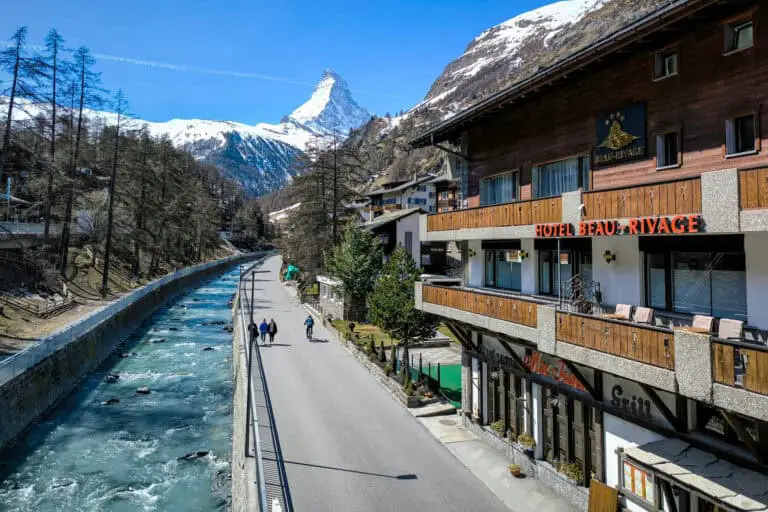
 Region:
  Recommended season: early January to late April and early June to late October
 This is a car-free town
 Altitude: 1605 m (5266 ft)
 This is a winter sports resort
 Town size: Small
 Local language: German
 There is a train station
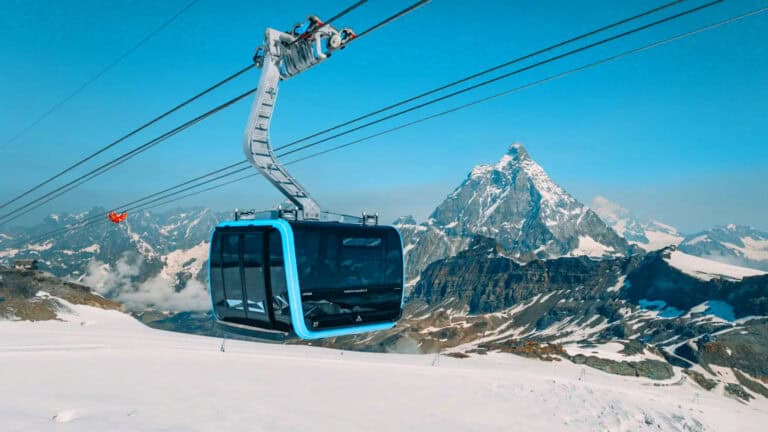 Incl. Glacier Palace
Matterhorn Glacier Paradise
Skip the ticket counter. Full ticket including Glacier Palace & Cinema Lounge.
 Unlimited travel
Swiss Travel Pass
Unlimited train, bus, & boat travel across Switzerland.
 Save 50%
Swiss Half Fare Card
50% discount on trains, buses, boats, lifts & mountain railways.
Video 
Traveling: reaching Zermatt, traveling in town, rail passes, mountain tickets, and map
How to reach Zermatt and how to travel in town: summary
Zermatt can be reached by train only. Cars are not allowed into the village. The town is small and you can do everything on foot, but there are free electric buses too.
You can plan each trip to, from and in Zermatt with the aid of the Swiss timetable.
Which train station in Zermatt do you need?
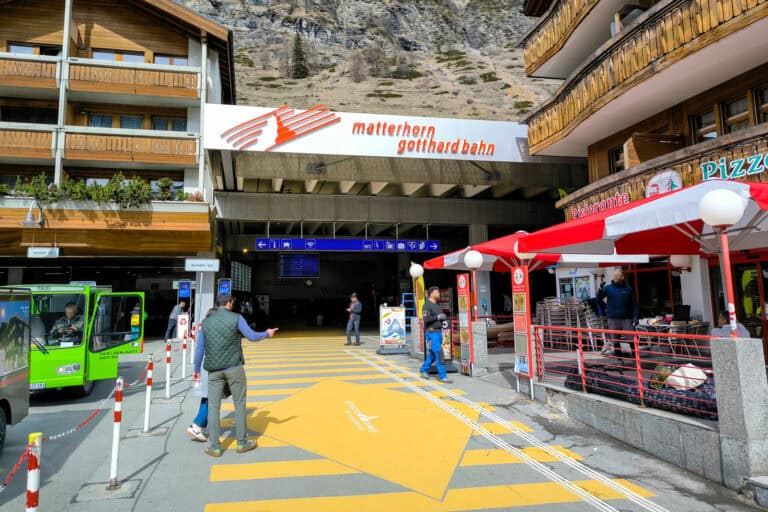
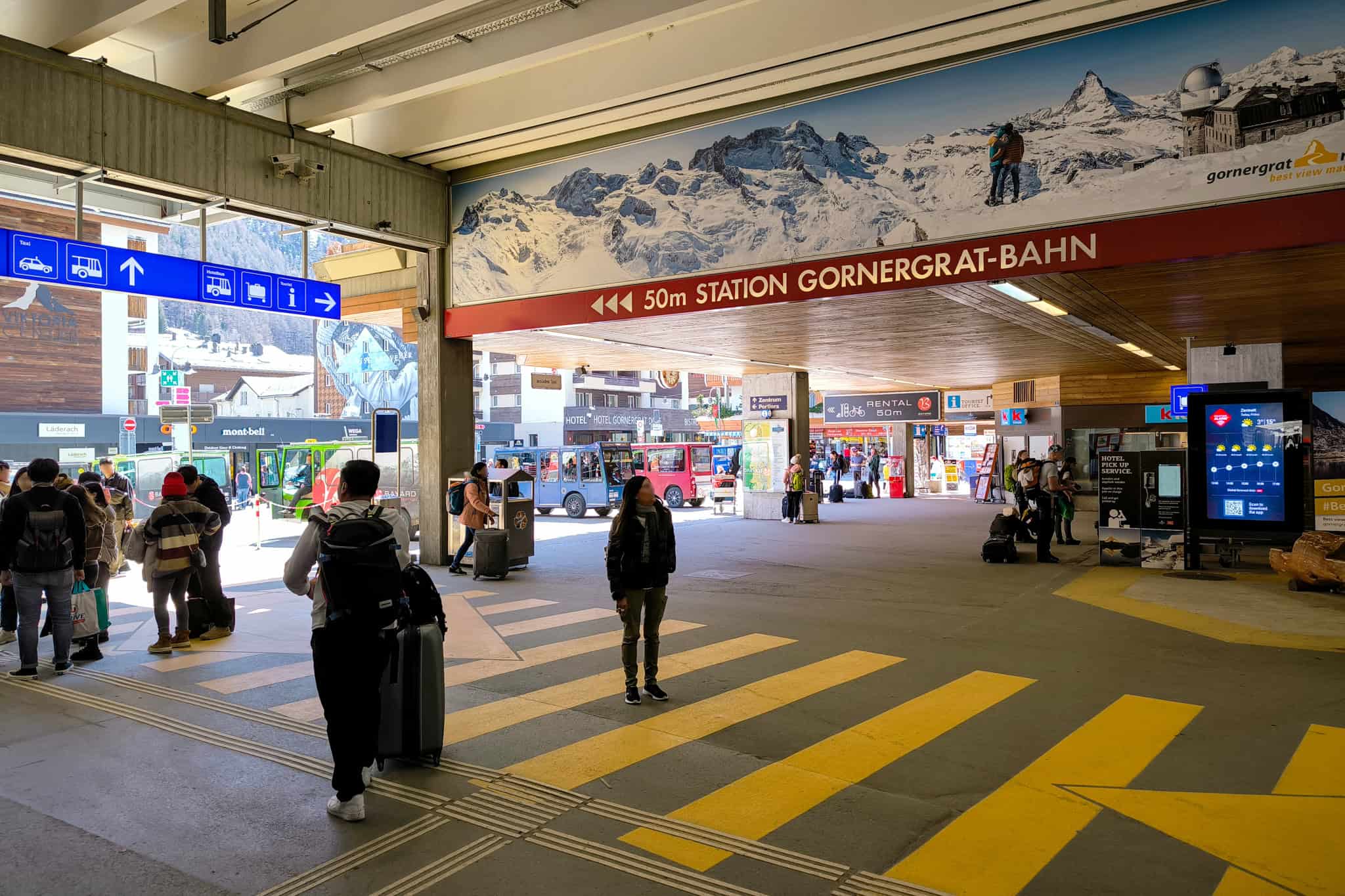
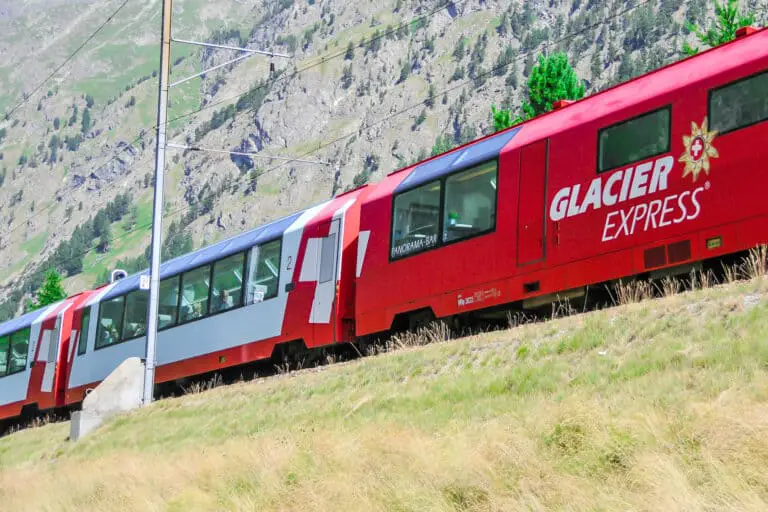
There are two rail stations in Zermatt. The regular train station, called "Zermatt" in the timetable, is where all trains arrive and depart. This includes the Glacier Express.
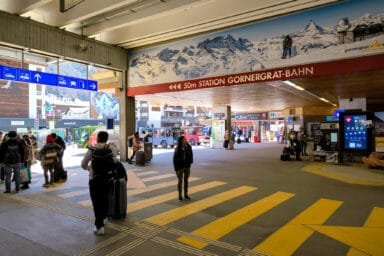
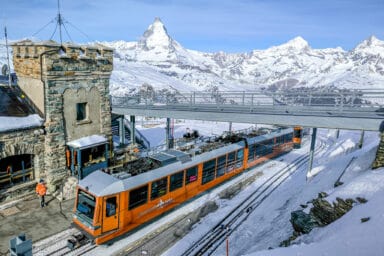
Just across the street there's the station for the cogwheel trains to the Gornergrat. This one's called "Zermatt GGB" in the timetable. "GGB" stands for "Gornergratbahn" (German for "Gornergrat Railway").


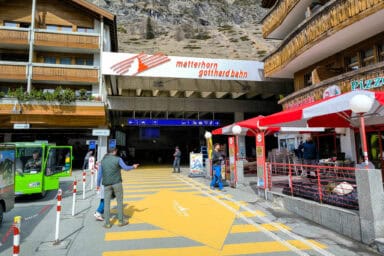

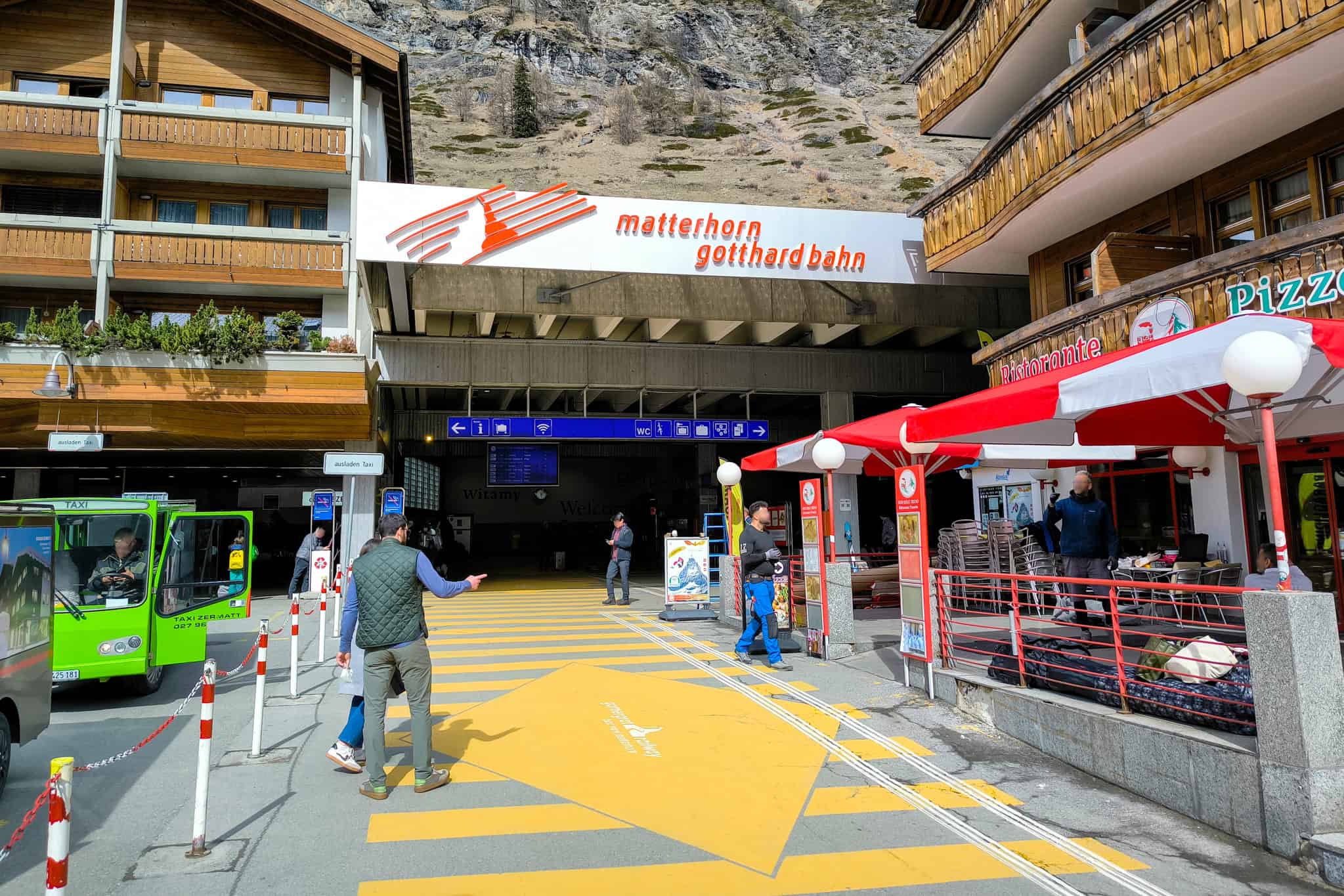
Reaching Zermatt by Glacier Express and normal trains
Zermatt can be reached via Visp or Brig in the Rhone Valley. You can travel either by Glacier Express, or by any of the regional trains run by the company MGB (the Matterhorn Gotthard Bahn). These connect to trains coming from the Rhone Valley, Lake Geneva, and the Bernese Oberland.
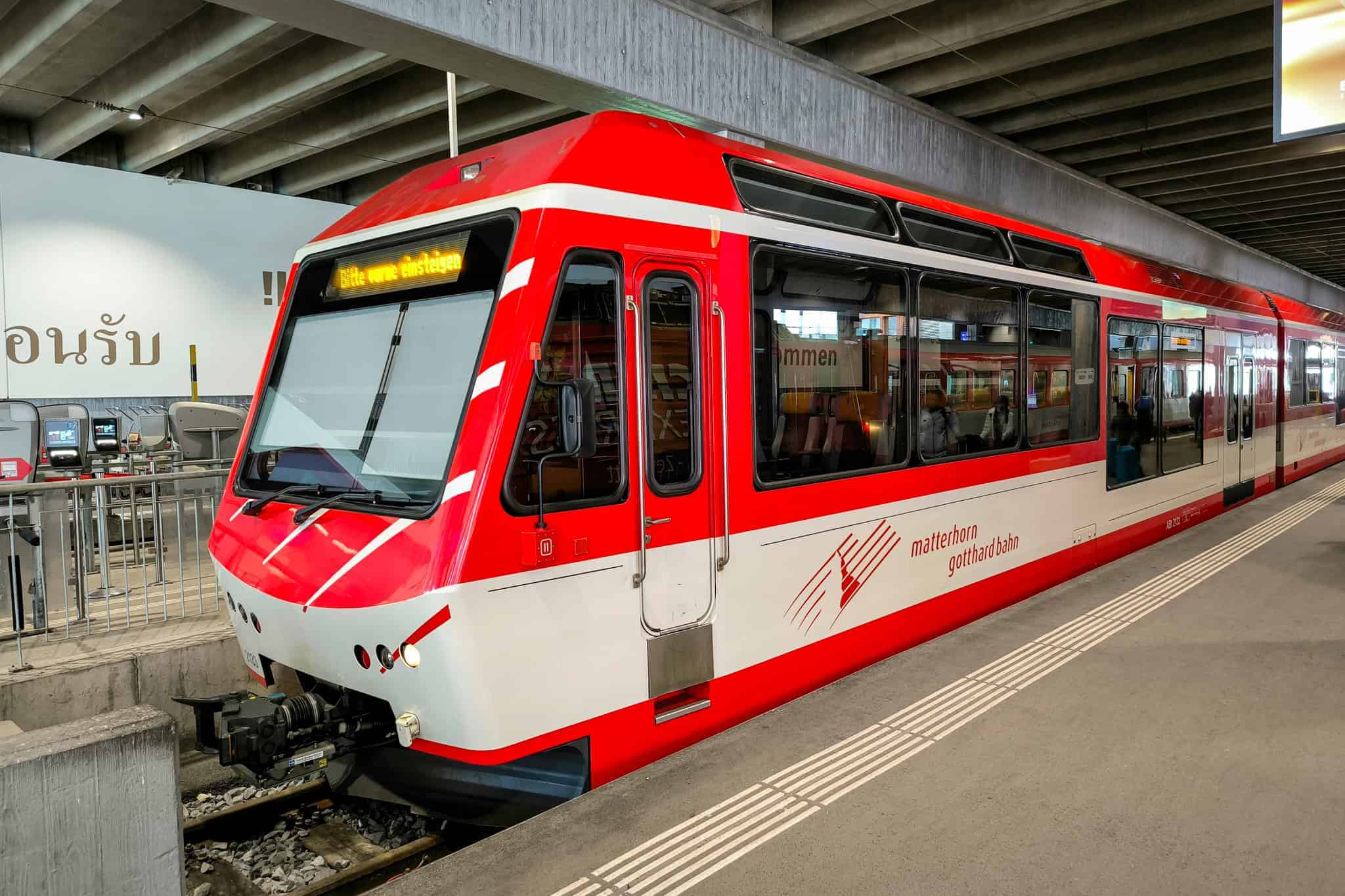

If you're traveling to Zermatt from the north, you can reach Visp either through the Lötschberg Base Tunnel or by the scenic Lötschberg Mountain Railway.

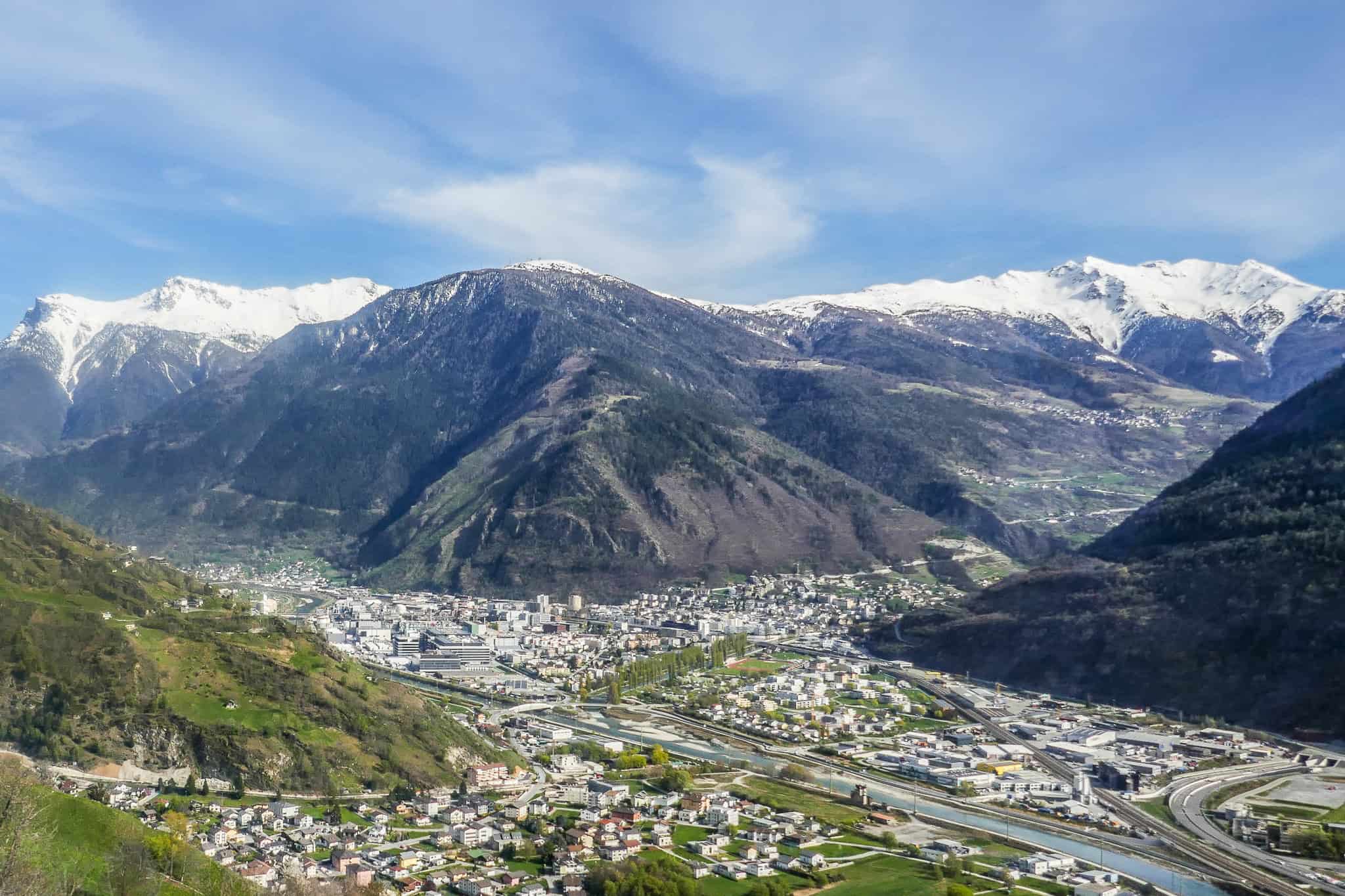
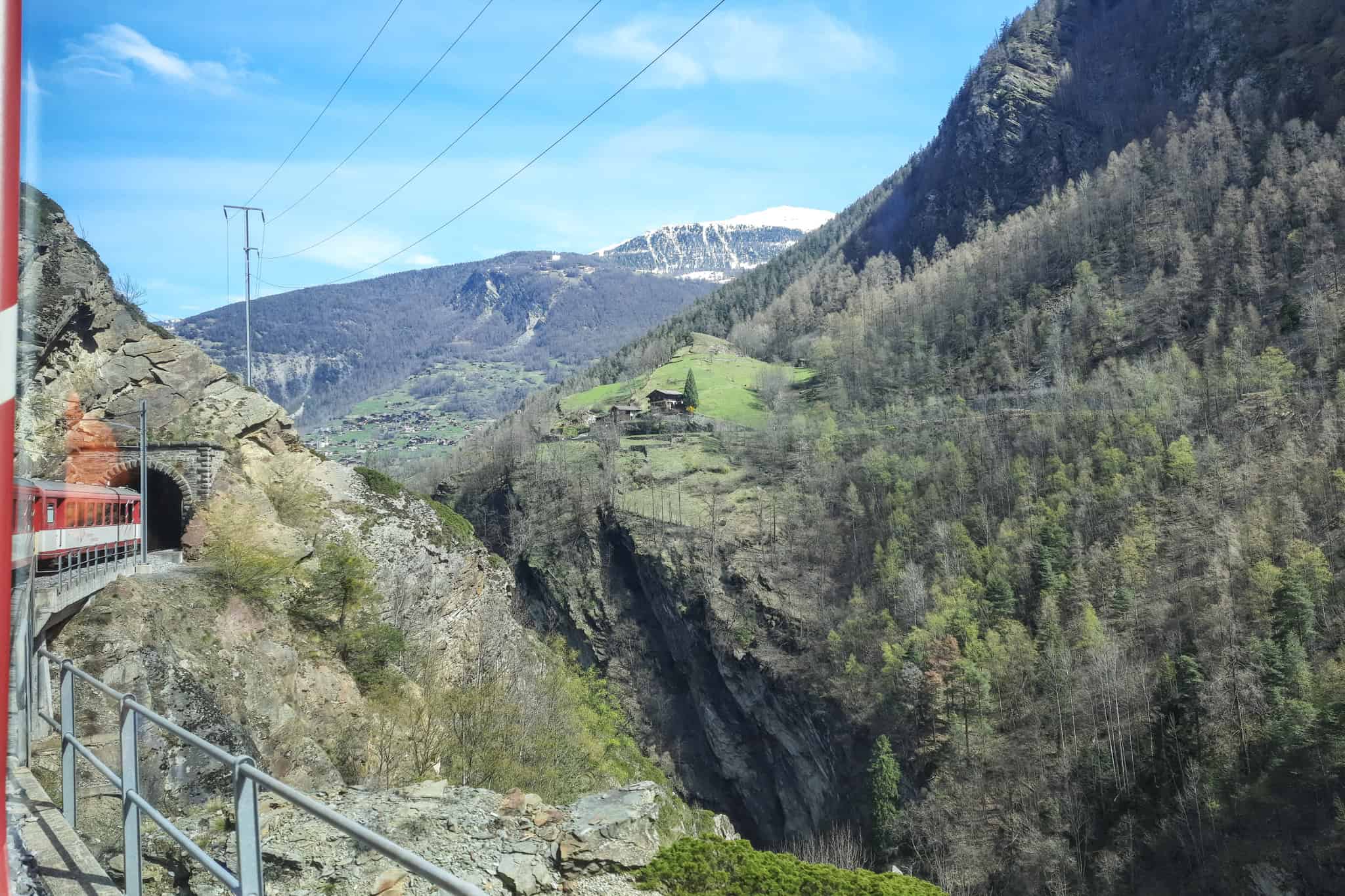
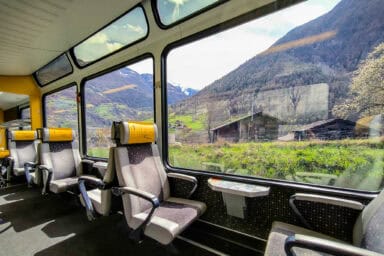
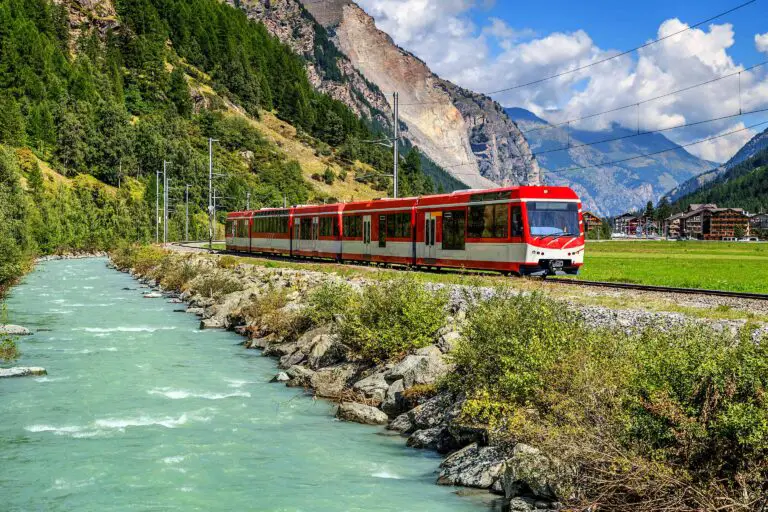
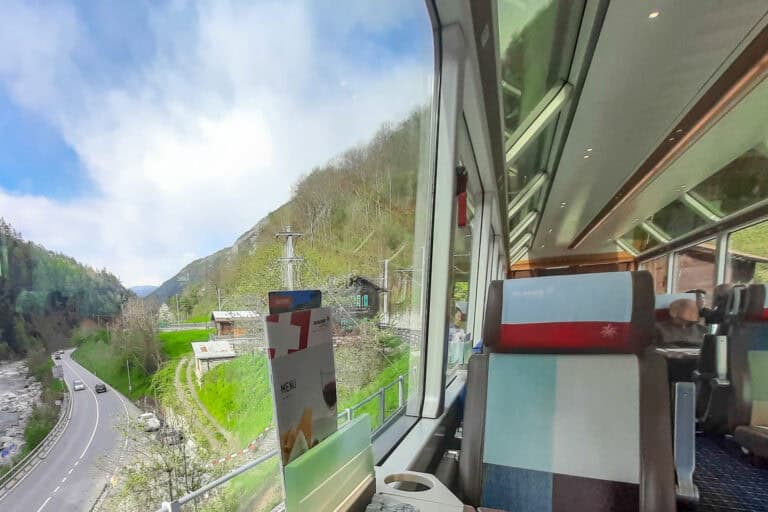
The train ride from Visp in the Rhone Valley to Zermatt is beautiful. The Matter Valley is defined by the blue Mattervispa river and steep rocky slopes.
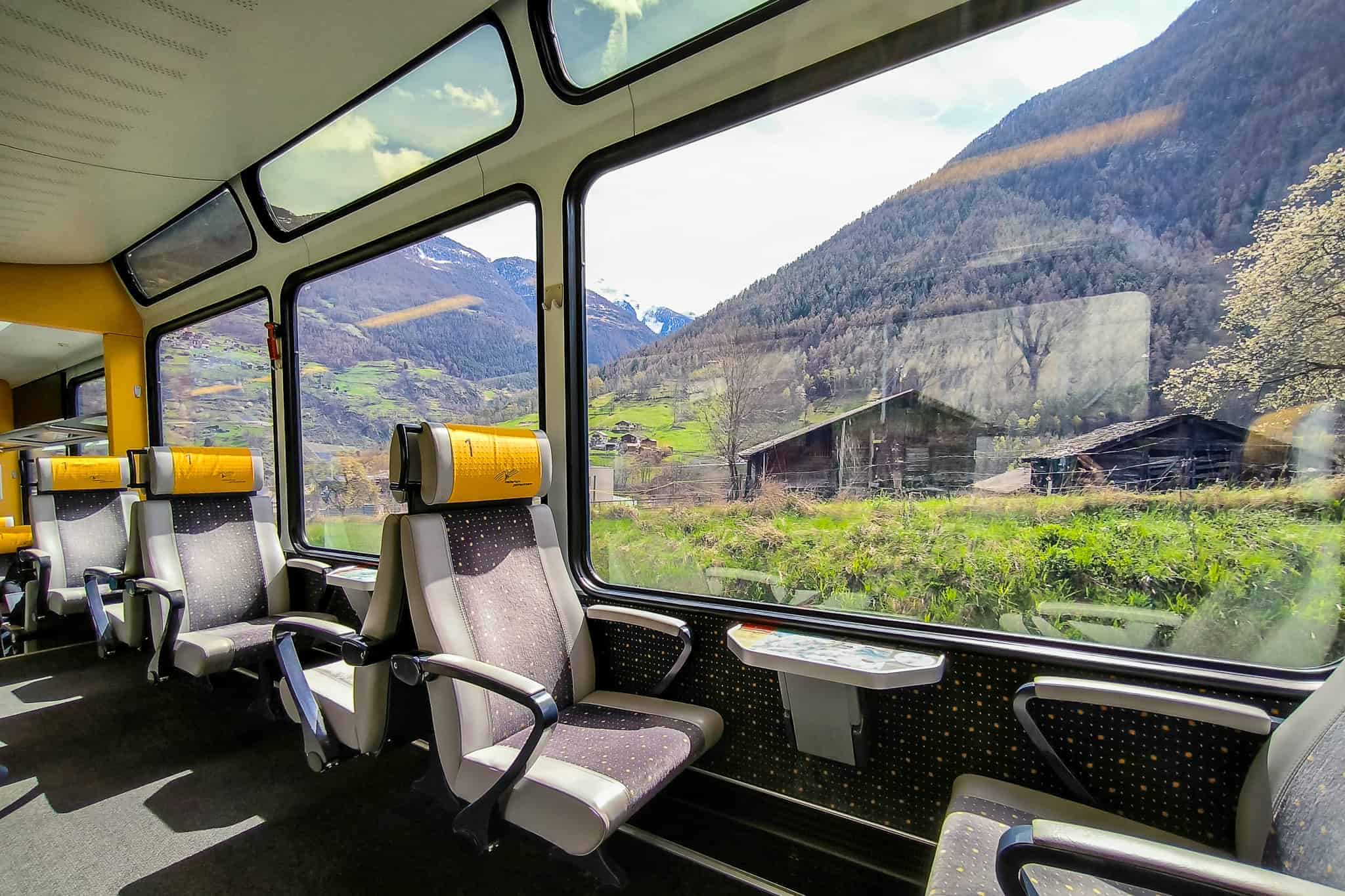
Examples of train travel times to and from Zermatt
Zermatt is at the very southern end of the Matter Valley in the Valais, and it's close to the Italian border. It takes some time to get there from the Swiss airports and other towns. Examples of train travel durations:
- 3h35 from Zurich Airport, 3h15 from Zurich
- 3h55 from Basel EuroAirport, 3h35 from Basel
- 4h05 from Geneva Airport, 4h00 from Geneva
- 1h25 from Brig
- 2h10 to 2h20 (via the Lötschberg Base Tunnel) or 3h20 (by the Lötschberg Mountain Railway) from Interlaken
If you want to visit other parts of the Valais from Zermatt, you'll first have to travel to Visp (1h10 by train) or Brig (1h25 by train) in the Rhone Valley.
How to reach Zermatt by car and where to park
You can't drive all the way to the village. Drivers need to use the large parking facility in the nearby village Täsch. From there, frequent trains depart to Zermatt. The ride takes 10 minutes. There are trolleys to help you carry your luggage.
You can avoid the mountain road to Täsch by parking in Visp in the Rhone Valley instead, and taking the train from there.
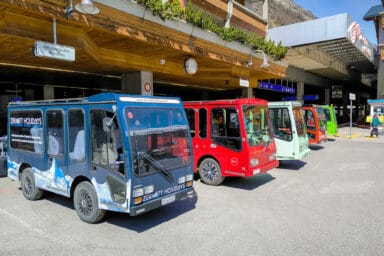
Free electric buses in Zermatt
Free electric buses are the public transport within Zermatt. There are two bus lines:
- The red line "Winkelmatten": connecting the train station, the center of town and the Winkelmatten district.
- The green line "Bergbahnen": connecting the train station, the center of town and cableway/funicular stations, such as the valley stations of Sunnegga and Matterhorn Glacier Paradise.
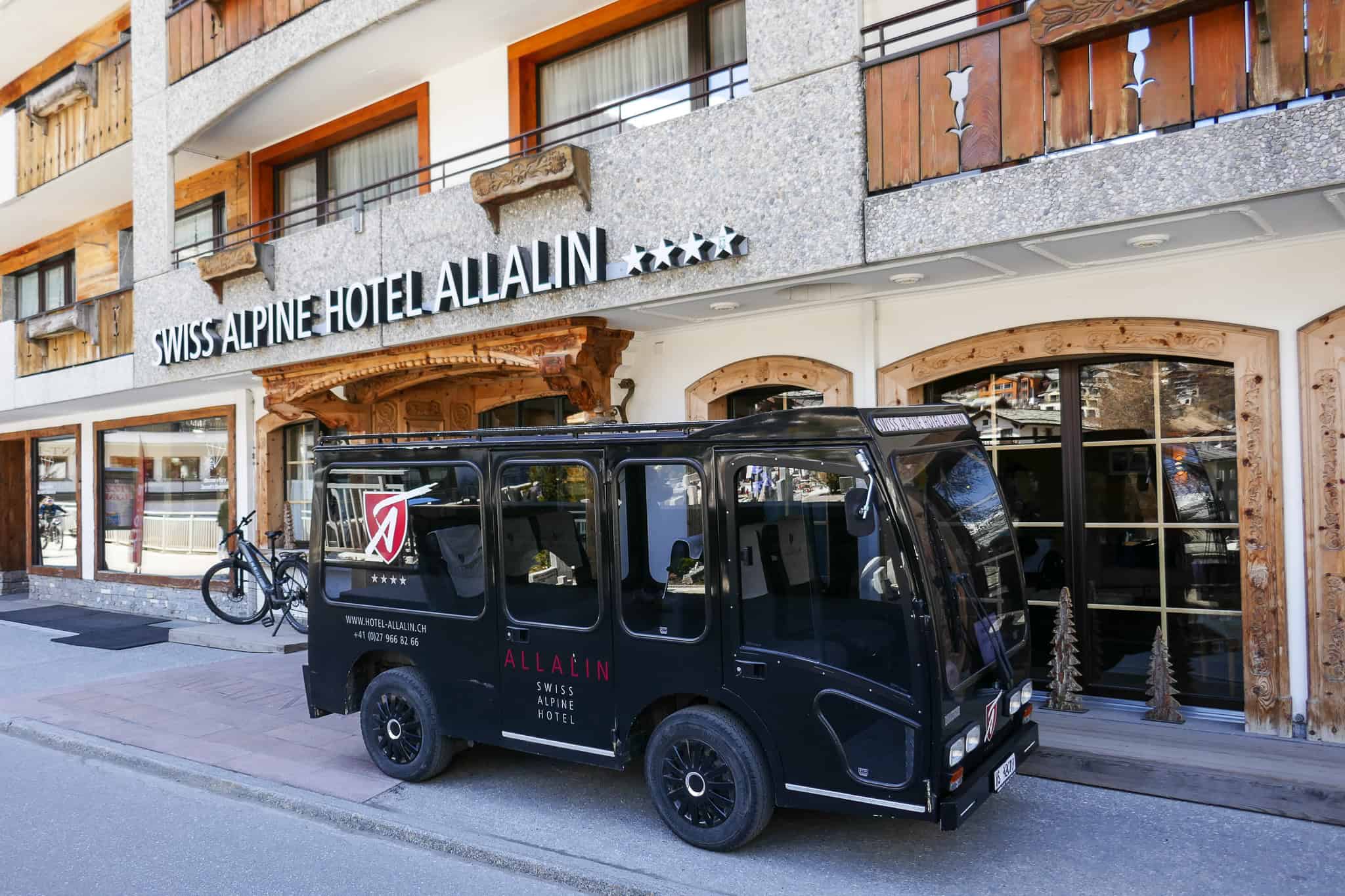
On request, many hotels offer a free transfer to and from the rail station with their own electric vehicle.


Mountain transport from Zermatt
You can hike right into the mountains and use the cable cars, funiculars or trains. Most rail passes grant a discount on the tickets for mountain transport in Zermatt.
Rail passes suitable for Zermatt
- If you plan to visit other areas too, a nation-wide pass such as the Swiss Travel Pass or Swiss Half Fare Card can come in handy. Both provide a 50% discount on mountain rides from Zermatt.
- The Matterhorn Gotthard Pass can be a good choice if you want to travel in eastern Valais and western Graubünden for a limited number of days.
- Zermatt also offers the Peak2Peak Ticket and the Peak Pass. I'll discuss both below.
Find all rail pass options here.
All about the Peak2Peak ticket
What is the Peak2Peak ticket?
The Peak2Peak ticket is valid for a visit to both Gornergrat and Matterhorn Glacier Paradise in one day. It's not valid for Sunnegga-Rothorn. The tickets are available during the operation dates of the so-called "Riffelberg Express": from July to mid-August and from December to mid- or late April.
You need to follow a fixed route:
- First, you're traveling up to Matterhorn Glacier Paradise.
- Then you get back down, but not all the way to Zermatt. You'll change to a cable car at mid-station Furi: the "Riffelberg Express".
- This brings you to Riffelberg, where you board the cogwheel train to Gornergrat.
- After that, you take the train back to Zermatt.
You're also allowed to make this trip in reverse order, as long as you use the Riffelberg Express and not travel all the way down to Zermatt between both mountain visits.
Is the Peak2Peak ticket worth it?
If you plan to visit both mountains in one day, the Peak2Peak ticket is a great choice in most cases. It's cheaper than getting separate return tickets for Gornergrat and Matterhorn Glacier Paradise. And the Riffelberg Express gondola transfer between both routes is a beautiful ride!
Sometimes, it can be a disadvantage that you have to stick to this one particular route, for example if you plan to make hikes from mid-stations on the mountain routes. Plus: the ticket is not available all year long.
Is the Peak2Peak ticket discounted with a Swiss Travel Pass and Swiss Half Fare Card?
Yes, the Swiss Travel Pass, Swiss Travel Pass Flex, and Swiss Half Fare Card provide a 50% discount. Show your pass when buying your ticket at a desk. Or choose the 'Reduced' option when ordering online.


All about the Peak Pass
What is the Peak Pass?
The Peak Pass allows free traveling to Gornergrat, Matterhorn Glacier Paradise and Sunnegga-Rothorn as often as you like. The trains between Zermatt, Täsch and Randa are included too. You can choose a number of days that fits your plans.
Is the Peak Pass worth it?
If you're staying in Zermatt for several days and plan to visit all three mountains (maybe even more than just once), the Peak Pass is worth it. For a short visit to Zermatt with excursions to just one or two of the mountains, I don't recommend the Peak Pass.
You may have a rail pass that already provides discounts on the mountains near Zermatt. Getting a Peak Pass might not be economical in that case.
Is the Peak Pass discounted with a Swiss Travel Pass and Swiss Half Fare Card?
Yes, the Swiss Travel Pass, Swiss Travel Pass Flex and Swiss Half Fare Card provide a 25% discount. Show your pass when buying your ticket at a desk, or choose the reduced fare when getting your Peak Pass online.



The main travel routes from and to Zermatt explained
Zurich to Zermatt
Geneva to Zermatt
The best time to visit Zermatt
I prefer visiting Zermatt in early January to late April and early June to late October.
Zermatt in spring: April, May and June
April is still considered winter in the higher ski areas near Zermatt. The morning rides into the mountains can be crowded with skiers. Other than that, it's not too busy yet on the mountain tops and in the village. Ski runs may be open until mid- or even late April, depending on the snow conditions.
The valley itself may look a bit dull in early April. There's little chance the villages are still snow-covered, and it can be bit too early to see spring setting in. Nature usually becomes greener from mid-April.
May is great for a Zermatt visit, with spring on its way in the valley and snow on the peaks. It is low season though. Gornergrat is accessible year-round, but transport to Sunnegga-Rothorn and some of the routes to Matterhorn Glacier Paradise won't operate due to maintenance breaks.
June is when the summer season for mountains near Zermatt starts. You'll get to do most outdoor activities, but the higher hiking trails may not be accessible yet due to snow.

Zermatt in summer: July, August and mid-September
July and August are the warmest months in Zermatt, usually with the least amount of snow on the peaks. It's a popular season, so the village can be busy and even crowded.
Under normal circumstances, summer skiing should still be possible. But in warm summers, the options may be very limited. Instead, these are the perfect months for mountain biking and hiking.
Fall can start by mid-September. Temperatures will gradually drop and new snow can fall in the mountains. This process can start later too though, until well into October.
Zermatt in fall: October and November
I definitely recommend October to visit Zermatt. Most mountain transport operates until mid- or late October, and it's much less busy than in summer. You can make beautiful valley hikes, enjoying the autumn colors and the snowy peaks.
November is low season. Not all mountaintops are accessible. The valley can look somewhat grey and brown.
Christmas in Zermatt: December
Zermatt is a nice Christmas destination. You can enjoy dining and shopping in the illuminated main street. From mid-December, there’s a large Christmas tree that’s lit during a ceremony. Don’t expect a large Christmas market or holiday festivals.
The winter and ski season starts in December, so most cable cars and mountain trains will be running. Weather-dependent, the start of the ski season may be postponed.
Zermatt during winter: January to March
Zermatt is perfect for winter activities in late December, January, February, and March. Snowfall is likely in town, and almost guaranteed on the surrounding mountains.
Weather in Zermatt and forecasts
How warm does it get in Zermatt?
Zermatt is one of the higher mountain villages of Switzerland. Temperatures are relatively low here: average daytime temperatures range from 10°C to 16°C in summer.
It can feel warmer if it's sunny and windless though, and heat waves with much higher temperatures aren't exceptional either.
How cold does it get in Zermatt?
During the day, you should count on temperatures between 0°C to 5°C in winter. Frost during winter nights, with temperatures between 0°C and -5°C, is very common.
Does it rain in Zermatt?
Rainfall can occur year-round in Zermatt. The wettest months are April to August, and November.
The amount and type of rainfall are unpredictable: weather in the Swiss Alps is changeable. Showers and sunny spells may alternate in Zermatt over the day, but longer rainy or sunny spells are no exception either.
Does it snow in Zermatt?
Due to Zermatt's high elevation, snow in town is very likely in the coldest months: December, January and February. It's no absolute guarantee though.
The high ski and snow areas around Zermatt are pretty snow-sure.
5-day weather forecast for Zermatt
 Incl. Glacier Palace
Matterhorn Glacier Paradise
Skip the ticket counter. Full ticket including Glacier Palace & Cinema Lounge.
Unlimited travel
Swiss Travel Pass
Unlimited train, bus, & boat travel across Switzerland.
Save 50%
Swiss Half Fare Card
50% discount on trains, buses, boats, lifts & mountain railways.
Accommodation in Zermatt, plus saving tips
How to save on hotels and apartments
Zermatt isn't a low-budget destination. It's home to many chic hotels. There are plenty of mid-range and budget hotels too. Generally though, the price level of hotels in all price ranges is higher than in less touristy Swiss towns.
I list recommended hotels, and explain which parts of town are best, in my Zermatt hotel guide.
My saving tips:
- Use our budget hotel selection to find the cheapest hotels in Zermatt, even close to the rail station.
- If you stay for a week or longer, consider a self-catering apartment instead.
- Base yourself in one of the nearby villages like Täsch, Randa, or St. Niklaus rather than in Zermatt.

Find your hotel in Zermatt: from budget to luxury
Zermatt in short: the ultimate alpine town in summer and winter
Zermatt is situated at the end of the Matter Valley in the canton of Valais, at one of the most scenic spots in Switzerland. The highest peaks of the Alps can be found here, the most prominent one being the Matterhorn.
The village is high up in the mountains, at 1605 m. In summer, mountain excursions, hiking trails, and mountain bike trails attract visitors. During winter, skiers and snowboarders use the many lifts and slopes.
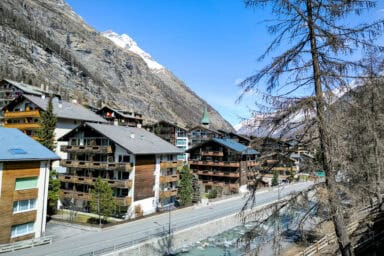
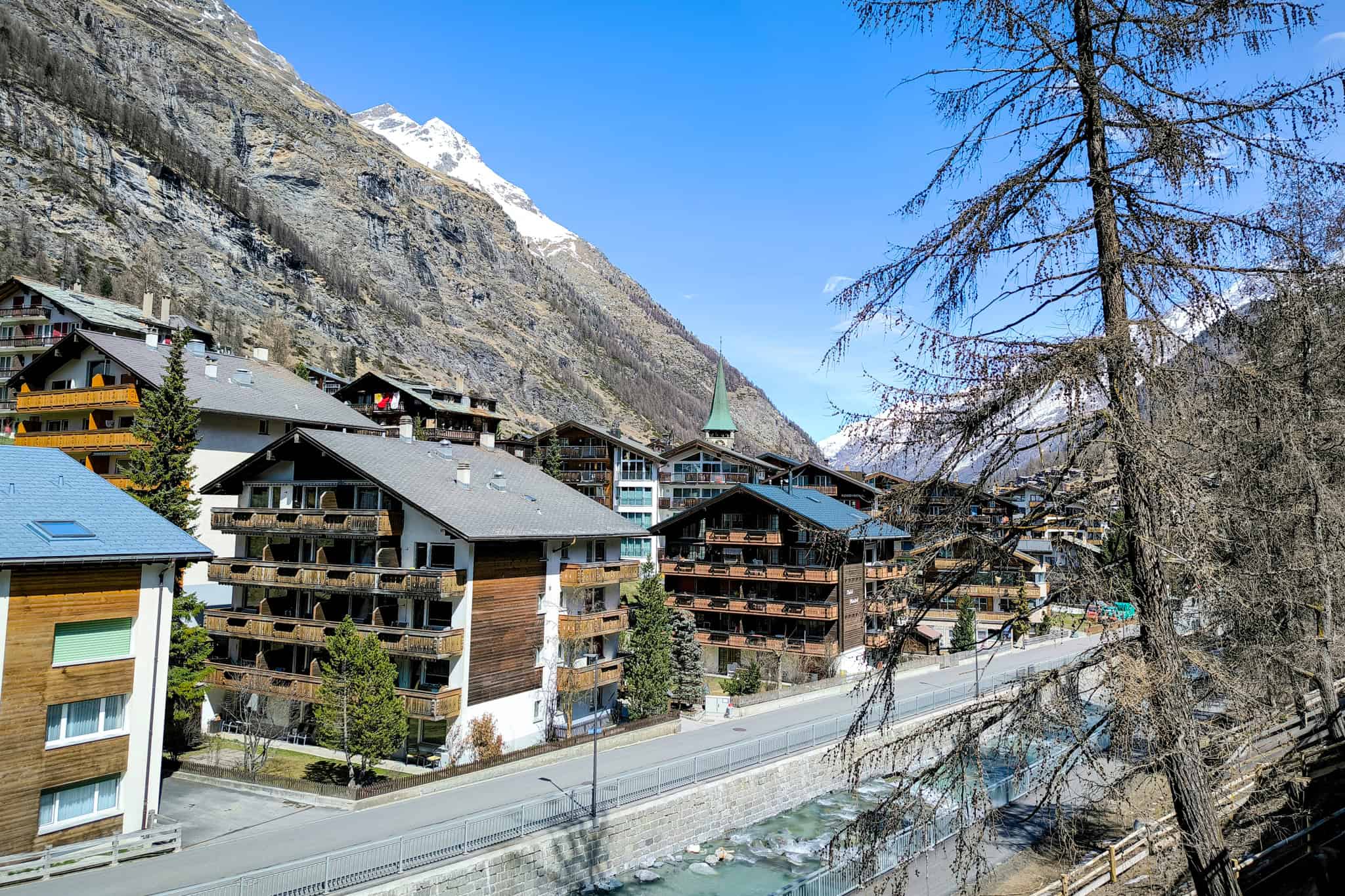
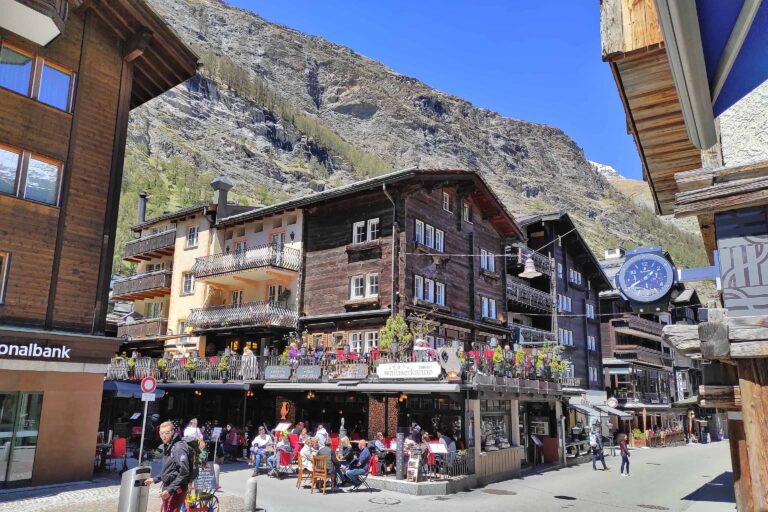
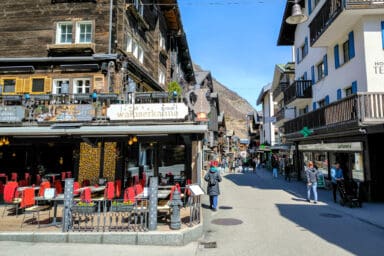
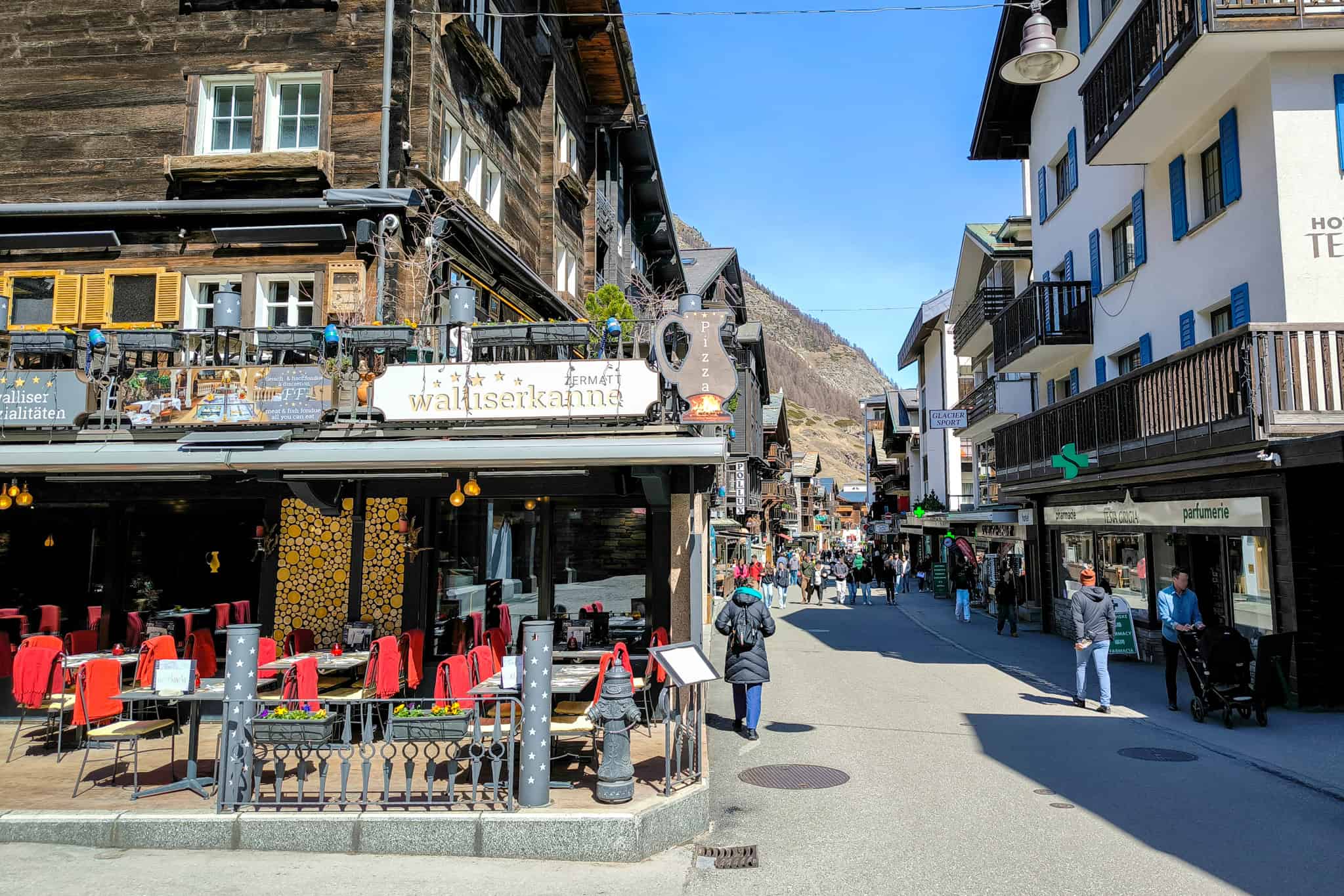
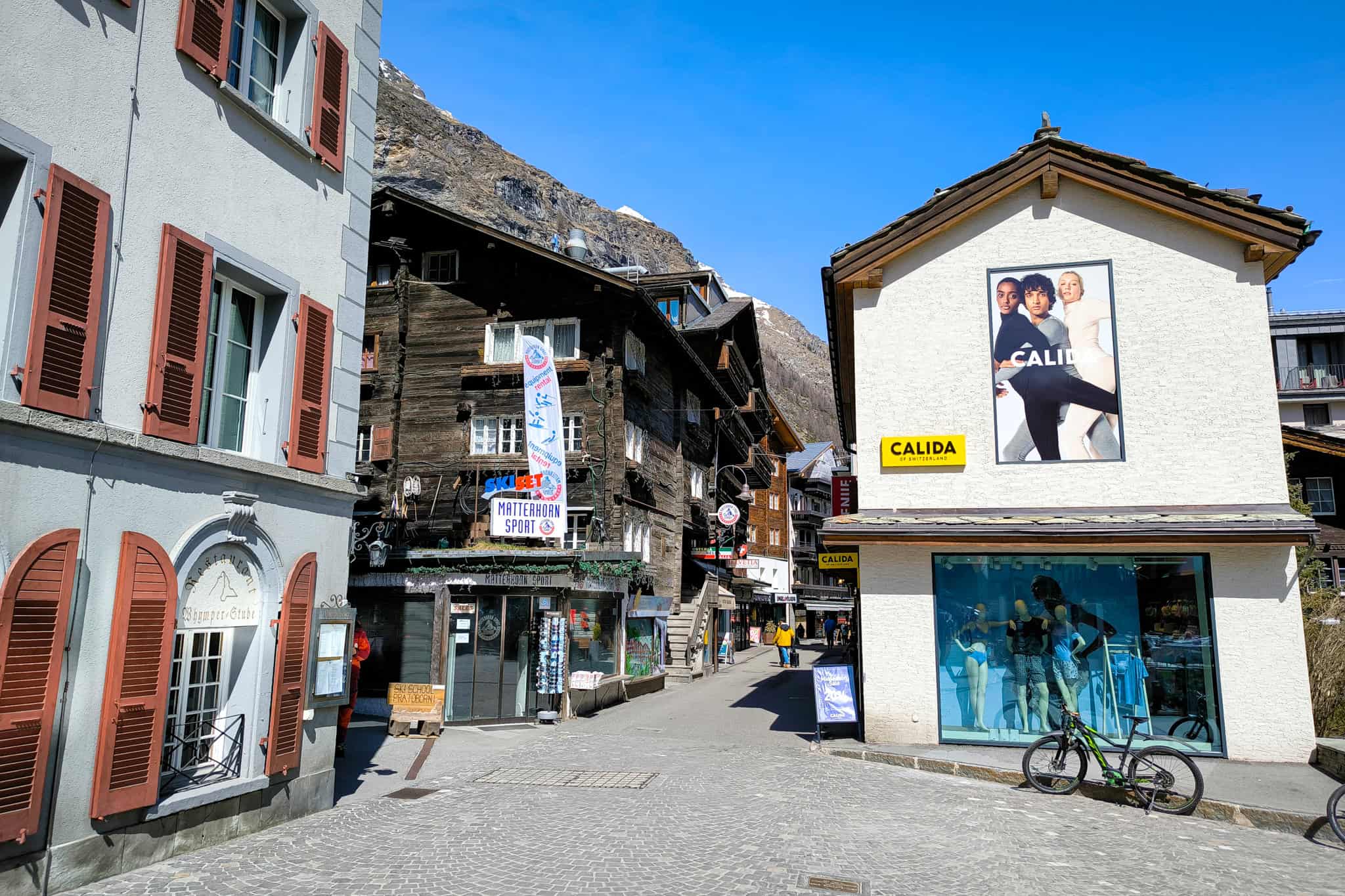
Zermatt is car-free and still looks authentic, with traditional wooden chalets. You’ll have views of the high peaks that surround the town.


 Incl. Glacier Palace
Matterhorn Glacier Paradise
Skip the ticket counter. Full ticket including Glacier Palace & Cinema Lounge.
Unlimited travel
Swiss Travel Pass
Unlimited train, bus, & boat travel across Switzerland.
Save 50%
Swiss Half Fare Card
50% discount on trains, buses, boats, lifts & mountain railways.
The pros and cons of a stay in Zermatt
Perfectly geared to tourists…
Zermatt has a perfect tourism infrastructure:
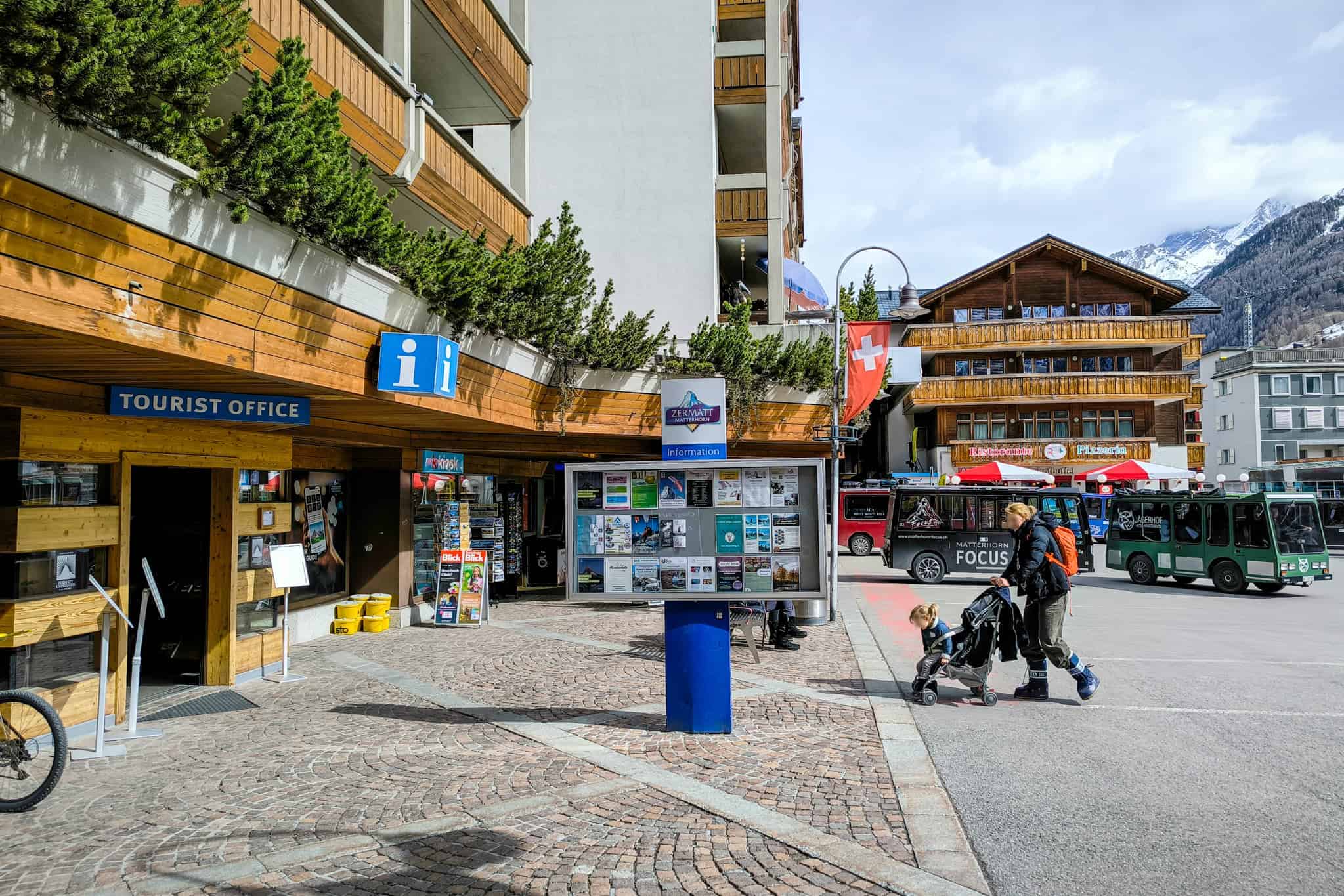
- You’ll find a tourist information office and plenty of shops, hotels, restaurants, chalets, and rental points for ski gear and other outdoor gear.
- They’re all close to one another, centered around the main street “Bahnhofstrasse”, and within walking distance from the station. Everything is well-signposted and it’s easy to find your way.
- The network of mountain transportation and hiking trails ensures you can quickly visit nature.
… but it can be crowded
This, and the beautiful nature, cause Zermatt to be a tourist hotspot. This has some downsides:
- It can get crowded, especially in high season: June-August and late December-February.
- Even though it’s car-free, the many electric cars still mean you have to pay attention as a pedestrian.
- The village is densely built. Many hotel rooms and apartments have south-facing rooms, but other buildings can block the view of the Matterhorn. If an unobstructed view is important for you, check this before you book.
Zermatt is dependent on weather, and secluded
The town is at a high altitude and is surrounded by mountains, conifer forests, and ski slopes. It has its own microclimate, which may or may not work out in your favor.
The mountains either block clouds from coming in or keep them in one place. It can rain for days or not at all for weeks. You’d best be prepared for anything. Zermatt is perfect for outdoor activities, but bad weather options are limited. And its isolated location makes it time-consuming to go somewhere else.
FAQ about Zermatt
-
Where is Zermatt located?
Zermatt is located in the Swiss canton Valais. It’s on the southern end of the Matter Valley, close to the Italian border.
Zermatt is a 3h15 train ride from Zurich and a 4h00 journey from Geneva.
-
What is Zermatt famous for?
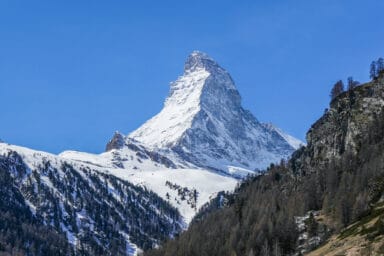
Zermatt is famous for its location at the foot of the iconic mountain Matterhorn. You can view the Matterhorn from several mountains that are accessible by cogwheel train (Gornergrat) and other transport (Matterhorn Glacier Paradise and Sunnegga-Rothorn).
Many more high and impressive Swiss peaks surround the village. The overall scenery is amazing.
Zermatt is also at one end of the famous panoramic Glacier Express train route.
-
Is Zermatt in Switzerland worth visiting?
Yes, Zermatt is certainly worth your time. Even if you feel the village is too touristy, its beautiful mountain scenery deserves at least a day trip.
-
Is Zermatt car-free?
Yes, Zermatt is car-free. Only small electric buses ride in the village.
You can’t reach Zermatt by car either. You’ll have to park in the nearby village Täsch and continue to Zermatt by train.
-
Are the buses in Zermatt free?
Yes, the electric buses in Zermatt are free for everyone.
-
How many days to spend in Zermatt?
If it fits your itinerary, include at least 1 full day in Zermatt. This allows you to stroll around town, and to do one or two mountain excursions.
If you want to properly enjoy the mountains and the many restaurants in town, stay for at least 3 or 4 days.
-
Interlaken or Zermatt: which is better?
I advise Interlaken if you want a central base from which you can travel in several directions, such as Lake Thun, Lake Brienz, Bern, Lucerne and the Jungfrau Region. It’s also directly on the GoldenPass train route.
Zermatt is better if you want to see the Matterhorn, you prefer an authentic village with traditional Swiss chalets, want to stay right within the mountains, or travel by Glacier Express.
-
Grindelwald or Zermatt: which is better?
Grindelwald is a better choice if the Bernese Oberland and the Jungfrau Region (with famous activities such as the Schilthorn and Jungfraujoch) are on your wish list.
Grindelwald is also located more centrally than Zermatt: in 35 minutes you’re in Interlaken, from where you can travel in several directions.
Zermatt is recommended if you want to see the Matterhorn, don’t mind a somewhat isolated location, and if your itinerary includes the Valais or the Glacier Express train journey.
-
St. Moritz versus Zermatt: which is better?
Both St. Moritz and Zermatt, at both ends of the Glacier Express, are attractive small mountain villages. I help you choose in my Zermatt versus St. Moritz comparison.
-
How to fly to Zermatt?
The Swiss airport closest to Zermatt (in terms of traveling time) is Zurich Airport. A train ride to Zermatt takes 3h35.
The travel differences with other Swiss airports are small: it’s a 3h55 train journey from Basel EuroAirport, and a 4h00 ride from Geneva Airport.
Activities in Zermatt
Find things to see and to in Zermatt

Choosing between Gornergrat, Matterhorn Glacier Paradise and Sunnegga-Rothorn
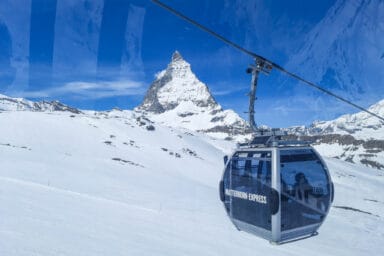
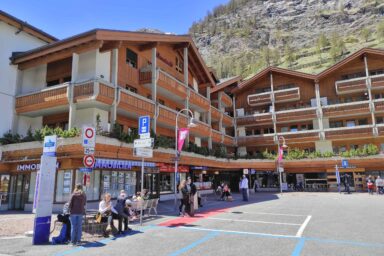
There are 3 wonderful mountain excursions to be made from Zermatt: to Gornergrat, Sunnegga-Rothorn, and Matterhorn Glacier Paradise. Not sure which one to choose? I'll help you out in my detailed comparison!
Summer activities in Zermatt
One of the mountain excursions should be on your list, to enjoy views of the Matterhorn and the other peaks.
Summer is also the perfect time for hiking. Some of my favorites are:
- the easy and scenic walk from Furi to Zermatt;
- the hike from Riffelalp to Sunnegga;
- the route from Rotenboden to Riffelalp.
There's an extensive network of mountain bike trails near Zermatt as well.
Winter activities in Zermatt
There are lots of pistes for experienced skiers and snowboarders. But you’ll also find easy slopes and special classes for children and beginners.
In addition, you can go winter hiking and snowshoe hiking, or have snow fun by sledding, curling, and tobogganing. Winter paragliding is available too.
The nearby towns of Täsch, Randa, St. Niklaus, and Grächen also have lots of pistes and winter activities. The ski area of Saas-Fee in the neighboring Saas Valley can be reached too, but a single trip takes about 2 hours.
Bad-weather activities
Zermatt is all about outdoor activities. In case of bad weather, here's what else you can consider:
- www.matterhornparadise.ch: Zermatt summer skiing
- www.e-bus.ch: Zermatt bus timetable
- www.matterhorngotthardbahn.ch: car park in Täsch near Zermatt
- www.zermatt.ch: Zermatlantis Museum
Prices
- www.matterhornparadise.ch: Peak2Peak ticket
- www.matterhornparadise.ch: Peak Pass
Itineraries including Zermatt
Glacier Express itinerary
Best of Switzerland itinerary
Ultimate scenic train itinerary

Gornergrat, Matterhorn Glacier Paradise, Sunnegga-Rothorn
Hike Täsch-Zermatt
Glacier Express reservations